

Is A 79 Series Coil Conversion Worth It?
A 79 Series coil conversion swaps the factory rear leaf springs for a coil-sprung rear, giving the biggest gain in articulation and ride comfort. We fit them for owners who want maximum flex and a smoother rear, and who accept the extra cost and complexity over a leaf or parabolic upgrade. For a hard-working load-carrier, a matched leaf setup is often the smarter spend.
A rear coil conversion is the most involved rear-end change we do on a 79 Series, and it splits opinion for good reason. It transforms comfort and wheel travel, but it costs more and suits some builds far better than others. Here's how we help owners decide whether it's worth it for the way they use the truck. When you're weighing your rear options, explore our 79 Series suspension range.
What is a 79 Series coil conversion?
The 79 Series runs leaf springs at the rear from factory. A coil conversion replaces that leaf setup with a coil-sprung rear, along with the locating hardware, links and shocks needed to control the axle. Because coils separate the job of carrying load from the job of locating the axle, the rear can flex more freely and ride more smoothly than a leaf pack. It's a bigger change than fitting new leaves or parabolics, and it's a considered build rather than a bolt-in afternoon.
A coil conversion rebuilds how the rear is sprung and located, which is why it delivers more but also asks more of the build.
What does a coil conversion improve?
Two things stand out: articulation and comfort. Coils let the rear axle move through more travel, so the truck keeps tyres planted on rough, twisted terrain where a leaf-sprung rear would lift a wheel. On the road and on corrugations, a well set-up coil rear rides more smoothly than a leaf pack, particularly when the truck is light. For owners chasing the best possible ride and off-road flex, that's the appeal.
If maximum flex and a plush rear are your priorities, a coil conversion delivers them better than any leaf setup.
When is a coil conversion not the right call?
For a truck that carries heavy loads constantly, a coil conversion is often not the best spend. Leaf springs handle constant heavy load simply and predictably, and a well-matched load leaf or parabolic pack gives you a strong result for less cost and complexity. A coil conversion also involves more parts and setup, so it needs doing properly to stay safe and reliable. If your priority is legal carrying capacity rather than flex, a certified 79 Series GVM upgrade is usually the better path.
For constant load-carrying or a capacity increase, a matched leaf setup or a GVM upgrade usually beats a coil conversion on value.
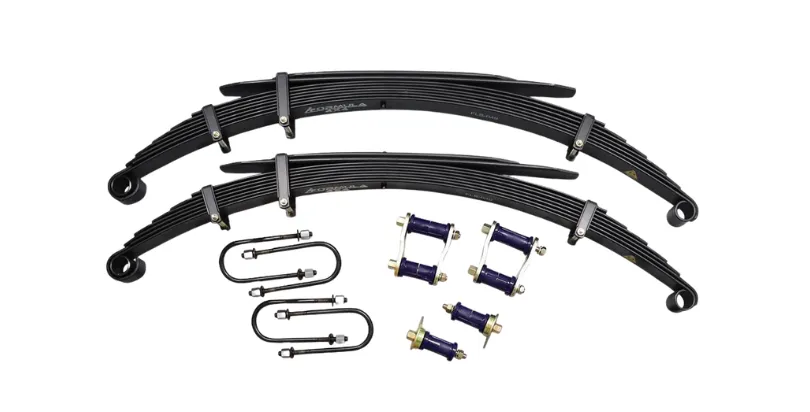
Formula 4x4 Leaf Spring Kit - approx. 50mm Lift at 0-100kg Troopy & Dual Cab
& 0-200kg Single Cab to suit Toyota LandCruiser 78, 79 Series 2007-on
Coil conversion vs a leaf or parabolic upgrade
| Factor | Coil conversion | Leaf / parabolic upgrade |
| Articulation | Best | Good with parabolics |
| Ride comfort unladen | Best | Very good with parabolics |
| Constant heavy load | Capable, needs correct setup | Simple and strong |
| Cost and complexity | Highest | Lower |
| Best for | Comfort and flex-focused builds | Load-carrying and value builds |
Read it by your priority: chase flex and comfort and a coil conversion wins; chase load capacity and value and a matched leaf setup usually does.
FAQs
Looking for more information about 4x4 lift kits and suspension? Below we answer the most commonly asked questions


