


Are Parabolic Springs Better Than Leaf Springs On A 79 Series?
For ride comfort, usually yes. We fit 79 Series parabolic springs because their fewer, tapered leaves have less inter-leaf friction, so they ride noticeably smoother than a standard multi-leaf pack while still carrying load. For constant maximum-weight work, a matched heavy load leaf can be the better call. Either way, the spring has to be paired with the right shock.
The rear springs set most of the ride quality on a 79 Series, so the parabolic versus standard leaf question comes up on nearly every build we quote. Parabolics are our go-to comfort upgrade for tourers; heavy load leaves suit trucks that carry weight every day. Here's how we decide between them, and what else has to be right. When you're choosing, explore our 79 Series suspension range.
What are parabolic leaf springs?
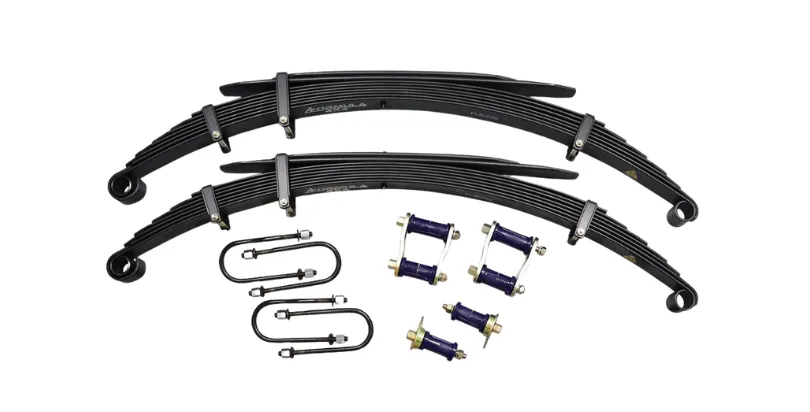
Parabolic springs are leaf springs built from fewer, thicker leaves that taper along their length, so each leaf flexes rather than relying on a tall stack. Because they use two or three leaves instead of many thin ones, there's far less inter-leaf friction, the rubbing that makes a standard pack ride harsh when unladen. On a 79 Series that gives you a smoother, more compliant rear that still carries a genuine load.
Standard multi-leaf springs stack many thin leaves. They're simple, tough and load-friendly, but that friction makes them ride firm empty. Neither is wrong; they're built for different priorities.
Parabolics trade some of the multi-leaf's raw simplicity for a much smoother ride, which is why tourers favour them.
Do parabolic springs still carry load?
We fit parabolics in different weight ratings, so you can have a smoother ride and real capacity by matching the rating to how you load the truck. The idea that parabolics are soft comes from comparing a light-rated parabolic to a heavy multi-leaf. Rated correctly, a parabolic carries properly while still riding better than the equivalent stacked pack. If your load is very high and constant, that becomes a capacity conversation as much as a spring one, and we'd look at a 79 Series GVM upgrade alongside it.
Choose the right parabolic rating and you keep the comfort without giving up carrying capacity.
When is a standard load leaf the better choice?
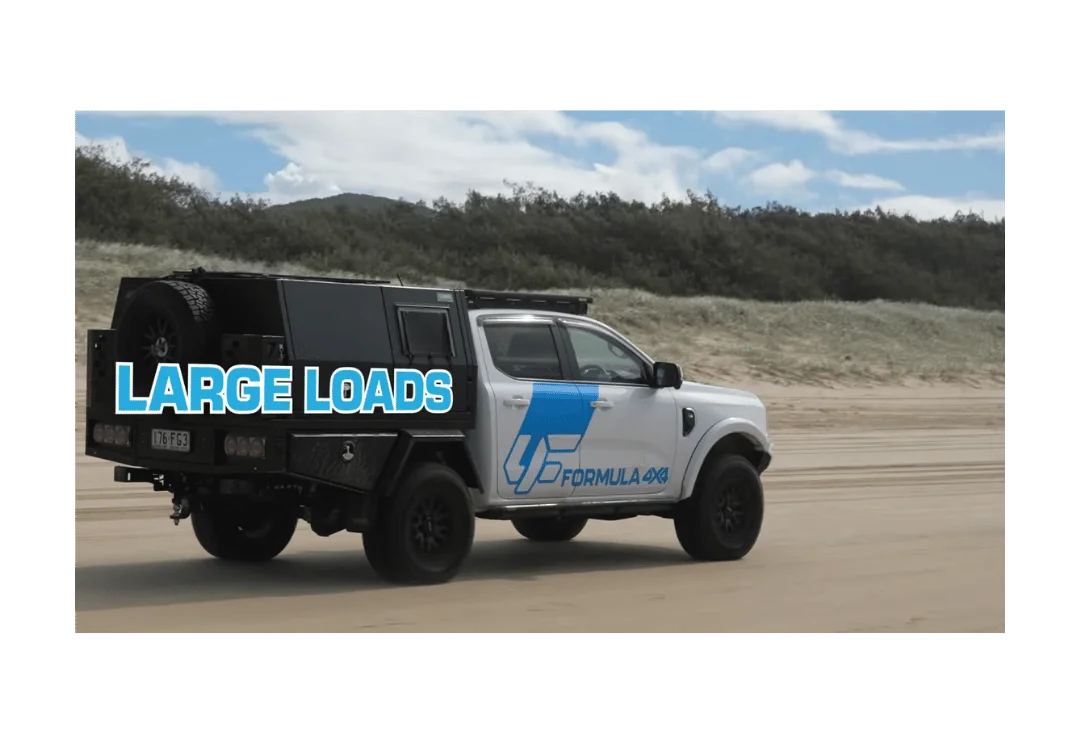
For constant, maximum-weight work, a well-matched heavy-duty load leaf can be the smarter option, because it's built to sit at height under sustained weight. A service body full of tools every day, or a truck that lives at its load limit, is exactly where a load leaf earns its place. The trade is ride comfort when the truck is light, which matters less on a dedicated work ute than on a tourer.
Pick a load leaf when the truck carries heavy all the time, and a parabolic when comfort and mixed loads matter more.
Parabolic vs standard leaf springs
|
Factor |
Parabolic springs |
Standard multi-leaf |
|
Ride comfort, especially unladen |
Smoother, less inter-leaf friction |
Firmer, can be harsh empty |
|
Load carrying |
Rated to load; match the rating |
Load-friendly, simple |
|
Best for |
Touring, mixed load, comfort |
Constant maximum-weight work |
|
Flex off-road |
More progressive |
Stiffer |
Read it by priority: if comfort matters and you're not at maximum load all the time, parabolics are usually the better upgrade, and we'll confirm the right rating.
FAQs
Looking for more information about 4x4 lift kits and suspension? Below we answer the most commonly asked questions


