
What Lift Height Should You Run On A 79 Series LandCruiser?
For most 79 Series tourers we fit a 2 inch (50mm) lift: it clears larger tyres, levels the front-heavy stance and keeps the driveline angles mild. Step up to 3 or 4 inches only when your tyre size and load genuinely call for it. Bigger changes castor, driveline angles and centre of gravity, so it needs the right supporting parts.
Deciding how much lift to run on a 79 Series is really a question of tyres, load and how you drive, not a race for the tallest stance. We fit these trucks every week, and the honest answer is that a well-matched 2 inch lift beats a big lift for most owners. Here we walk through what each height gives you, and when going higher earns its keep. When you're ready to match a kit to your build, browse our 79 Series LandCruiser lift kits.
Is a 2 inch lift enough for a 79 Series?
A 2 inch (50mm) lift is the height we recommend most often because it does the important jobs without the complications. It clears larger all-terrain tyres, corrects the nose-down stance a steel bar and winch create, and gives you the ground clearance most tracks ask for. Because a nominal 50mm lift is the straightforward end of the compliance rules in most states, you also avoid the extra engineering that taller setups can trigger.
Run at 2 inches with the right springs for your load and matched shocks, and the truck rides better than standard both empty and loaded. That balance of clearance, ride and simplicity is why it stays our default.
Two inches suits most 79s: enough clearance for bigger tyres and a level stance, without the headaches of going tall.
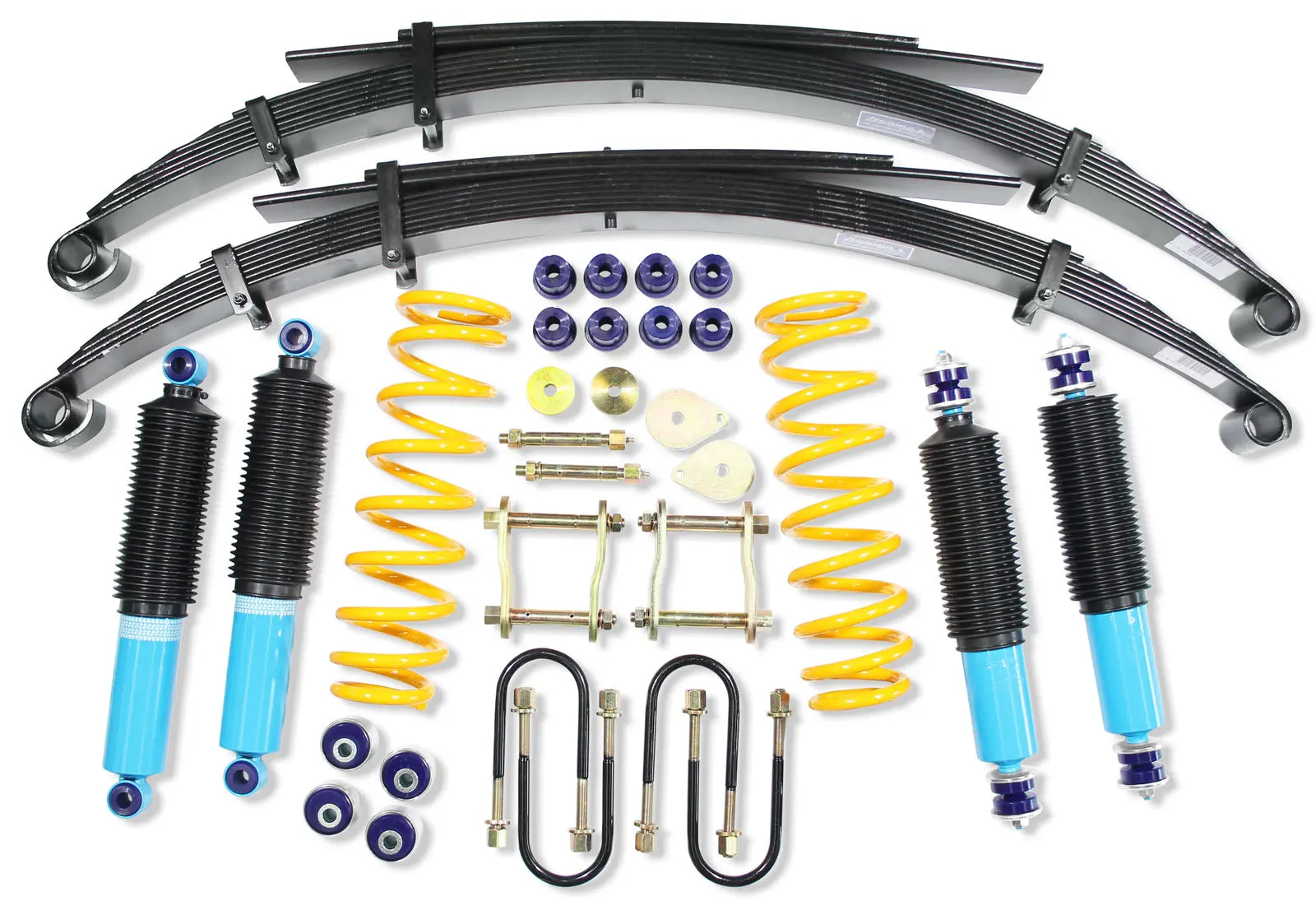
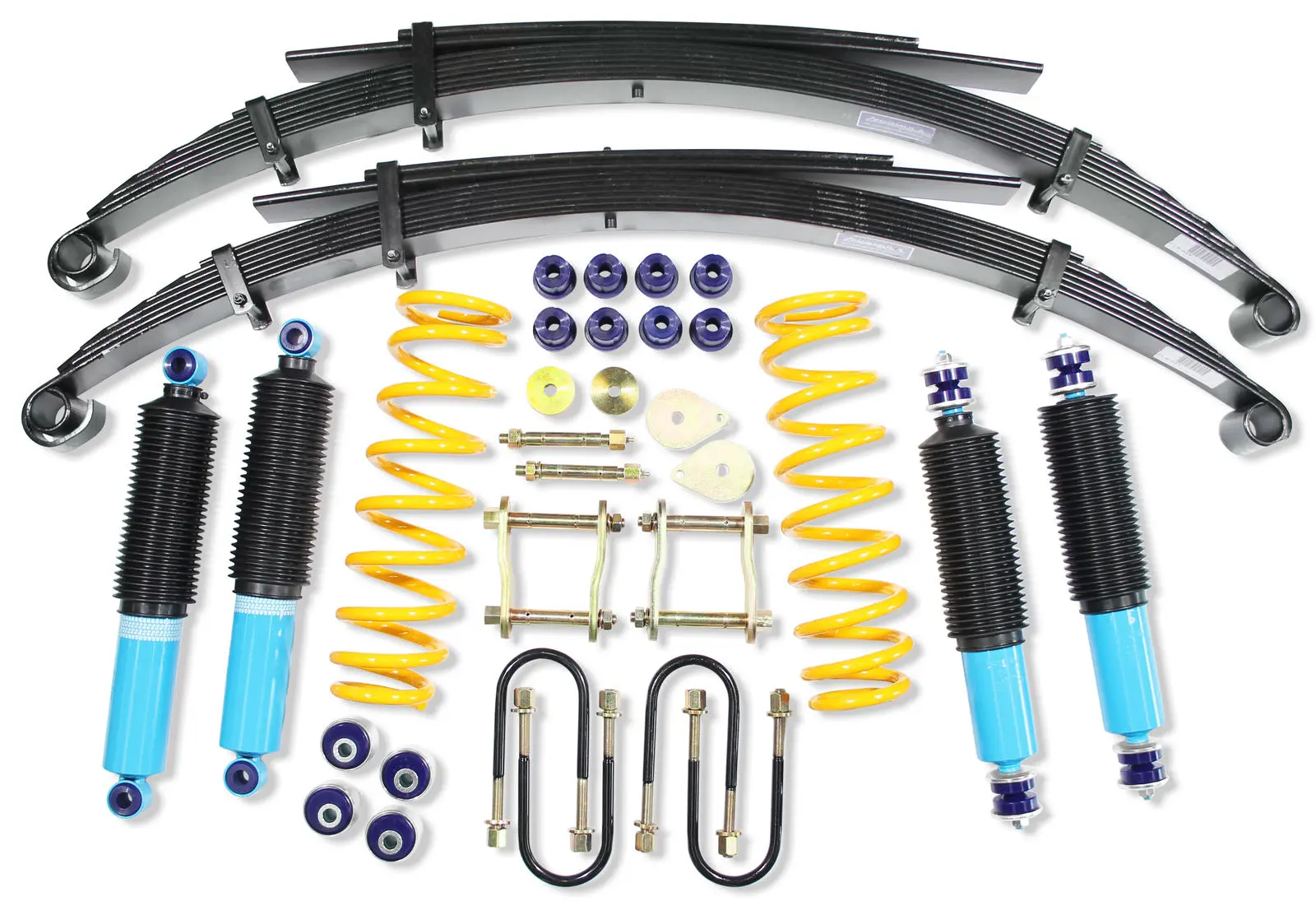
When does a 3 or 4 inch lift make sense?
A 3 inch lift starts to make sense when you're fitting larger tyres and want more clearance for serious off-road work. A 4 inch lift and above suit dedicated builds, comp trucks and rigs carrying big tyres that a smaller lift can't clear. The trade-off is that every extra inch changes your castor, your driveline angles and your centre of gravity, so a tall lift needs supporting parts to stay safe and drive well: castor correction, extended brake lines, sometimes a diff drop or drop boxes, and on-road manners that you have to be willing to accept.
We'd rather talk you into the right height than the biggest one. If your tyre and load plan genuinely needs 3 or 4 inches, we build it properly with the supporting components. If it doesn't, a 2 inch kit will usually make you happier.
Go to 3 or 4 inches when tyre size and terrain demand it, and budget for the supporting parts that keep a tall 79 driving right.
Is a bigger lift always better off-road?
No, and this is where a lot of money gets wasted. Past the clearance your tyres actually need, extra height mostly raises your centre of gravity and can hurt stability on-road and on side-slopes. The best off-road result usually comes from a moderate, well-matched lift with the right shock for the terrain, not the tallest kit on the shelf. Wheel travel, spring rate and damping do more for real-world capability than raw height.
Match the lift to your tyres and terrain, and stop there. That is how you get a 79 that climbs and tours well rather than one that just looks tall.
What is the legal lift limit for a 79 Series in Australia?
Lift height is governed by state rules and the national code (VSB14). As a rule of thumb, a nominal 50mm suspension lift is the straightforward path in most states, and going beyond that can require engineering certification depending on where you live and how the lift is achieved (suspension, tyres and body combined). Because the detail varies by state, we check what applies to your vehicle before we build, so you end up legal rather than caught out at inspection.
Keep it legal by confirming your state's limits before you lift, especially if you're combining a suspension lift with larger tyres.
79 Series lift heights compared
|
Lift height |
Best for |
Watch-outs |
|
2 inch (50mm) |
Most touring and daily 79s |
Little to none; the easy, effective default |
|
3 inch |
Larger tyres, more serious off-road |
Castor correction and alignment needed |
|
4 inch and up |
Dedicated builds, big tyres, comp |
Compliance, higher centre of gravity, more supporting parts |
Read it top down by how hard you use the truck, then talk to us so the springs, shocks and geometry match the height you choose. For more information, explore our 79 Series LandCruiser lift kits.
FAQs
Looking for more information about 4x4 lift kits and suspension? Below we answer the most commonly asked questions


