




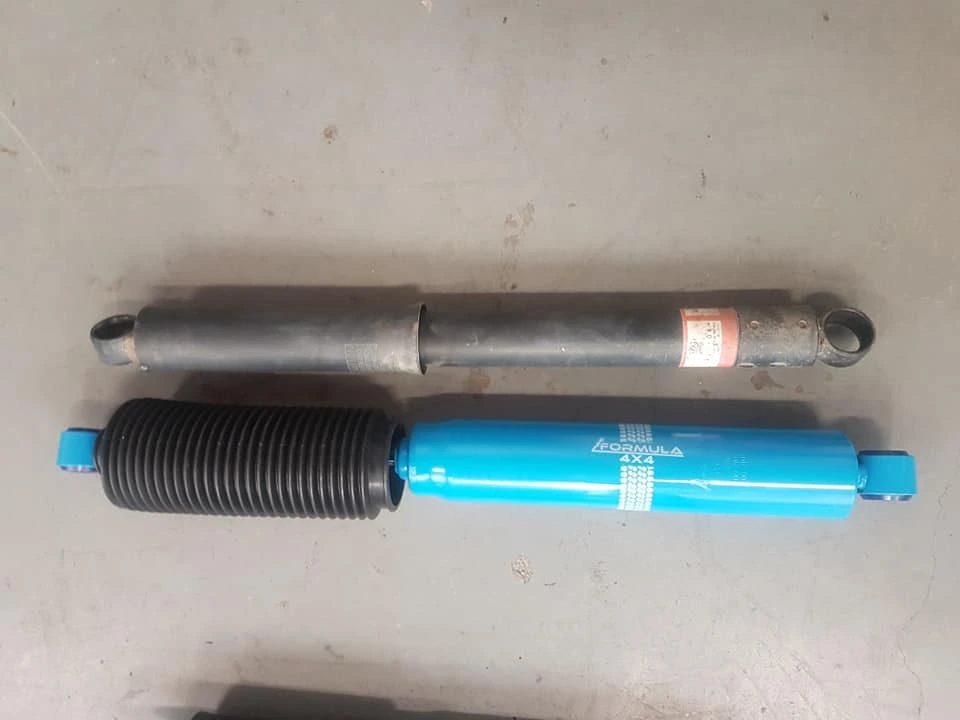

TL;DR: The main signs of worn shocks are excessive bouncing after a bump, nose-dive under braking, a floaty or crashy ride, clunks over bumps, uneven or cupped tyre wear, and oil leaking down the shock body. Spot two or more and your shocks are worn, so it’s time to get them checked.
Shock absorbers give up so gradually that most drivers never clock the day-to-day decline. It usually takes a drive in a car with fresh dampers to realise just how far their own had slipped. Knowing the symptoms, understanding why they matter and having a plan for what comes next makes all the difference, and it all ties back to our fuller guide on how to check your car’s suspension.
What do worn shock absorbers feel like to drive?
A car riding on worn shocks feels loose and unsettled. Head over a crest or dip and the body floats, taking its time to come back to rest. Hit sharp bumps or potholes and the ride turns harsh and jarring, because the damper has stopped smoothing those impacts. Out on the highway you’ll notice it wandering a touch and reacting more to crosswinds and the wash off passing trucks.
The giveaway is a disconnect between what the road is doing and what the body is doing. Healthy dampers keep those two in step, whereas worn ones let the body keep moving long after the road has levelled out. So if your car feels vaguer than it once did, worn shocks are near the top of the suspect list.
What are the clearest signs your shocks are worn?
Run through the list below, and the more boxes you tick, the surer you can be:
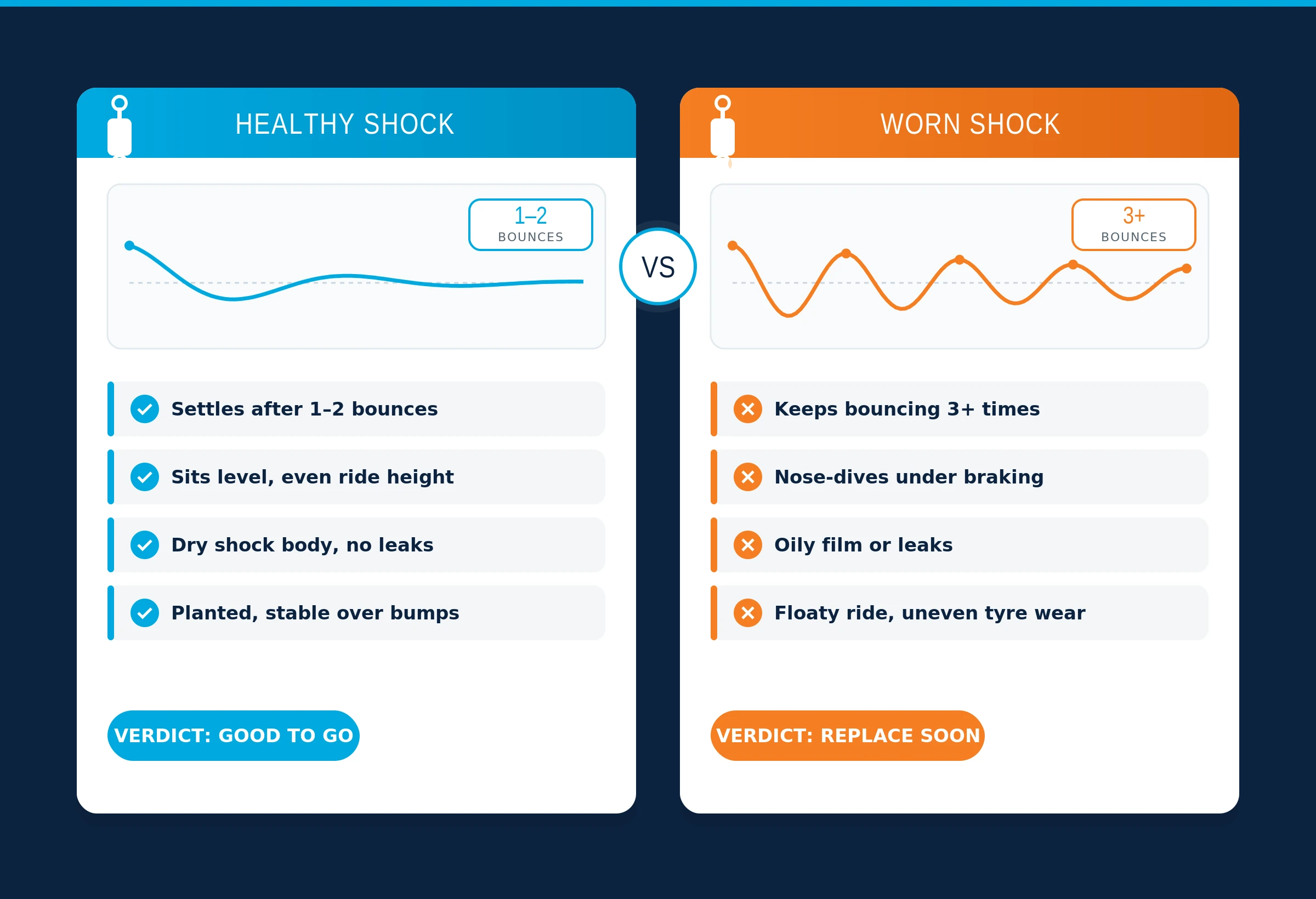
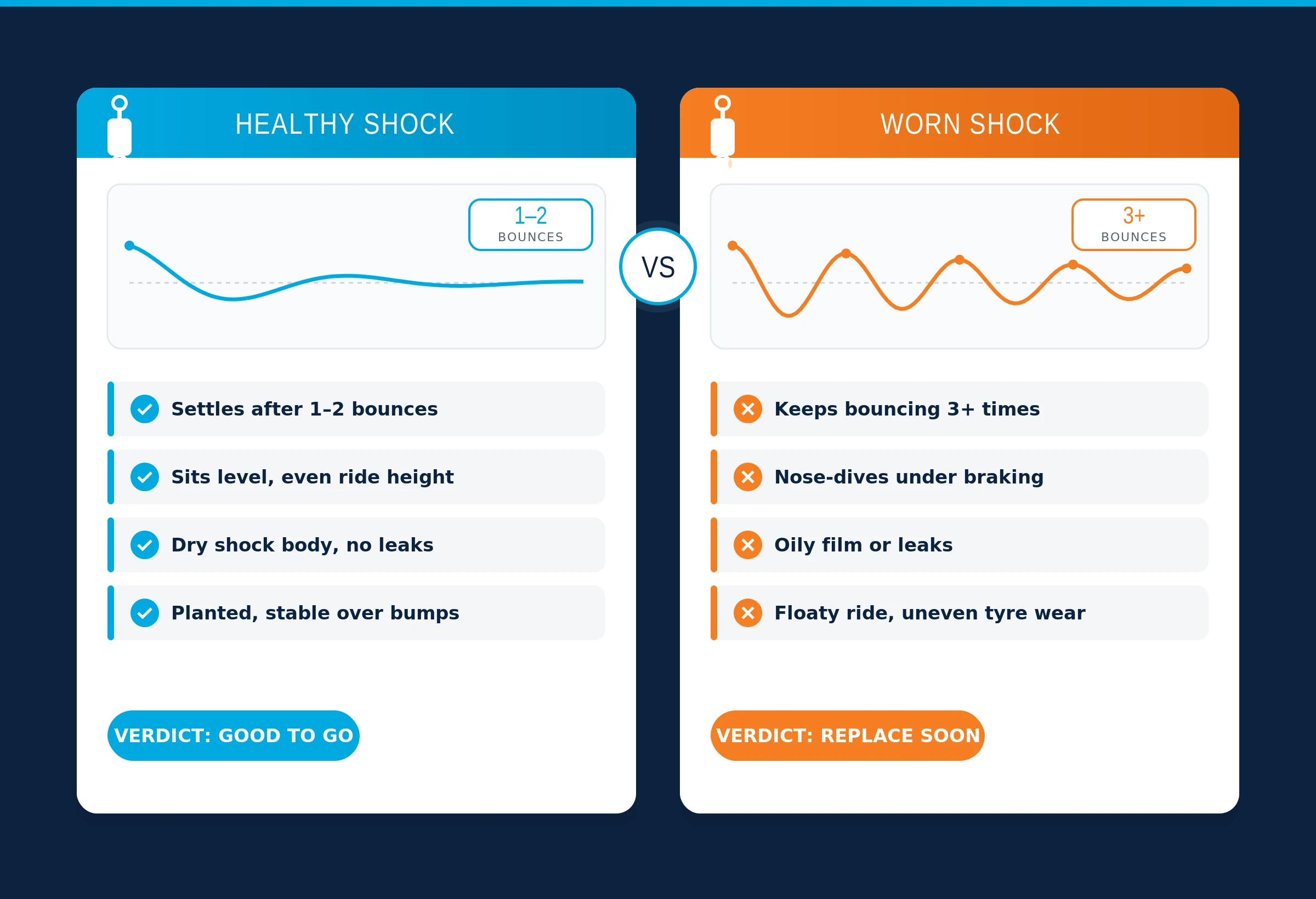
• Excessive bouncing. Push down on a corner and let go. If it rebounds more than once or twice, that shock is worn.
• Nose-dive and squat. The front dips sharply when you brake, and the rear settles low as you accelerate.
• Clunks or knocks over bumps. These often come from the mounts or bushes surrounding a tired shock.
• Leaking fluid. A wet, oily streak down the shock body means it has bled its damping oil and won’t come good again.
• Cupped or uneven tyre wear. Scalloped dips around the tread point to a tyre that’s bouncing instead of staying planted.
• Longer stopping distance. The car feels less settled and needs longer to pull up, especially on a wet road.
How do you test a shock absorber?
For a quick check at home, nothing beats the bounce test. Press down hard over one wheel, release, and count how many times it rebounds. Settling after one or two is healthy, while three or more points to a worn shock. Work around all four corners and compare them, since one side often wears out ahead of the other.
Back that up with a quick look for leaks and a glance at the ride height. For a firm answer, though, a workshop inspection on a hoist checks the shocks together with the bushes, mounts, ball joints and springs that tend to wear alongside them. It’s worth doing, because what feels like a “shock” problem sometimes turns out to be a worn mount or bush, and you want the right part replaced the first time.
Should you replace one shock or all four?
Shocks should always go on in axle pairs, so both fronts or both rears at the same time. Pair fresh damping on one side with a worn unit on the other and you’ll get uneven braking and cornering for your trouble. In practice the rears are usually tired by the time the fronts have gone, which is why plenty of owners do all four together and reset the car properly. Fitting quality shock absorbers matched to your vehicle brings the ride back in a single hit.
Worn vs healthy shocks at a glance
|
Sign |
Healthy shock |
Worn shock |
|
Bounce test |
Settles in 1–2 movements |
Keeps bouncing |
|
Ride |
Controlled over bumps |
Floaty then crashy |
|
Braking |
Car stays level |
Nose dives, longer stop |
|
Shock body |
Dry or lightly misted |
Oily streak, leaking |
|
Tyres |
Even wear |
Cupped/scalloped |
Worn Shock Absorber & Suspension FAQs
Looking for more information about worn shock absorbers and suspension? Below we answer the most commonly asked questions.
What are the symptoms of worn shock absorbers?
Can worn shocks damage other parts?
How long do shock absorbers last?
Is it safe to drive with worn shocks?
Why is only one shock leaking?
Do worn shocks fail a roadworthy?
Reckon your shocks might be gone? Book a free suspension check at your nearest Fulcrum workshop and we’ll confirm it for you. For the full picture, have a read of our complete guide on how to check your car’s suspension.


