




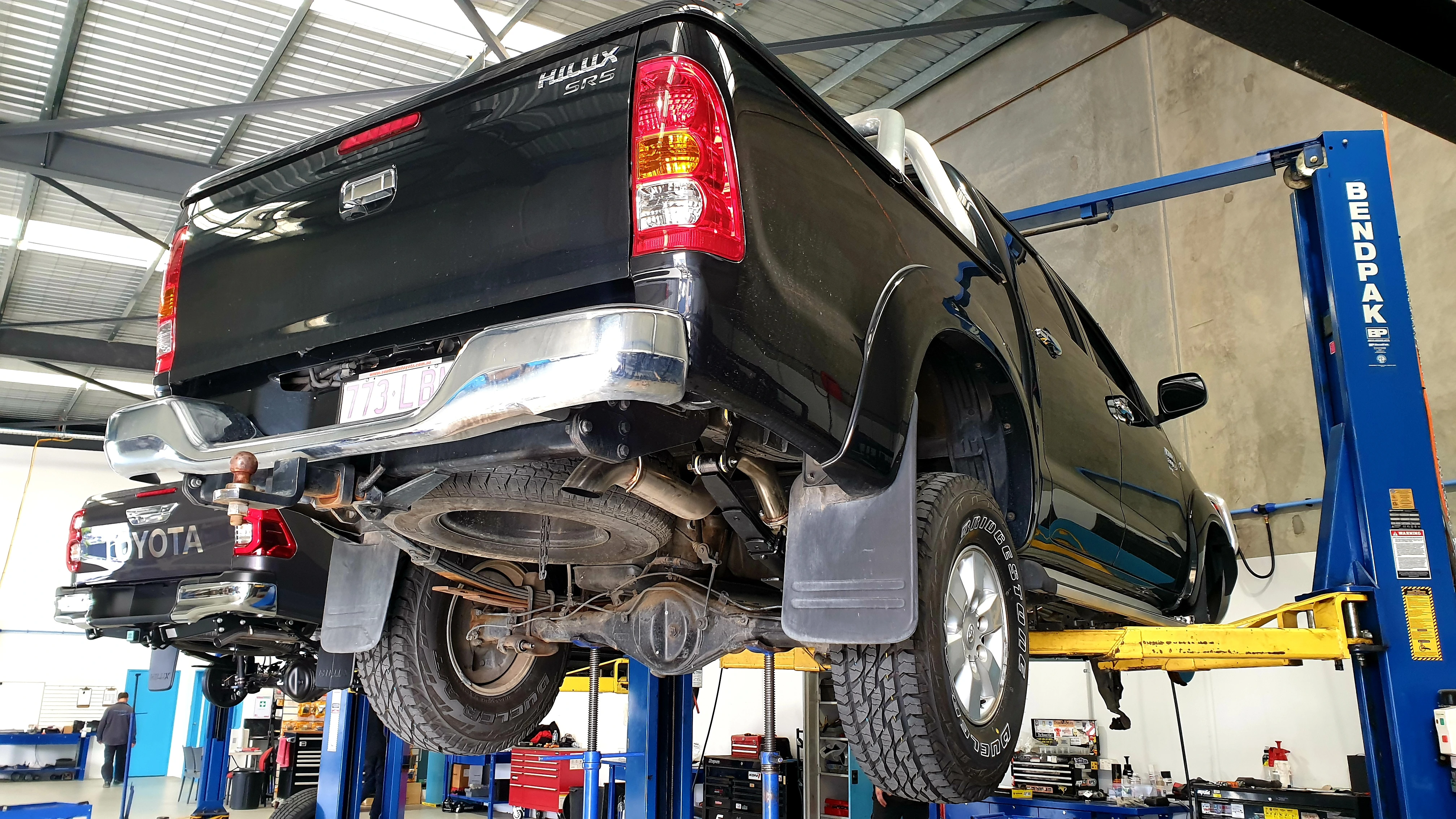

TL;DR: A few minutes is all it takes to check your suspension: do the bounce test on each corner, look for oil leaking down the shocks, listen for clunks over bumps and check the tyres for uneven wear. If the car keeps bouncing, dives under brakes or sits low on one side, the suspension is worn and due for replacement. Book a free suspension check to confirm it.
Suspension is one of those things you barely notice until it starts misbehaving. The car floats over crests, the ride turns crashy, or a clunk answers back every time you hit a pothole. The good news is that the signs are easy to read once you know them, and most of the tests take only a few minutes in your own driveway. Knowing roughly how long shocks and struts last also helps you judge when to replace like-for-like and when an upgrade makes more sense. Worn suspension costs you more than comfort, too: it stretches your braking distance and grinds through expensive tyres, so catching it early usually pays for itself.
What does your car’s suspension actually do?
Your suspension has two jobs: keep the tyres pressed to the road, and keep the body settled when the surface isn’t. It isn’t one part but a whole system working together. Springs, either coil or leaf, carry the car’s weight and soak up the big hits, while the shock absorbers (the dampers) control how quickly those springs compress and spring back. Surrounding all of that sit the control arms, ball joints, tie rod ends, sway bars and a set of rubber or polyurethane bushes that hold everything in place and damp out vibration.
So what does a shock absorber actually do? In plain terms, it stops the spring from bouncing. Take the damper away and the spring just keeps oscillating after every bump, the tyre skips across the road, and grip fades in and out. That floaty, vague feeling in a tired car is exactly this happening beneath you. It also explains why shocks count as a safety component rather than a comfort feature, because a tyre that isn’t planted can’t brake, steer or corner the way it should.
Because suspension fades so slowly, most people never notice the decline until they drive a car with fresh parts and feel what they’ve been missing. Getting to know the components makes it far easier to track down the real problem instead of throwing money at the wrong part.
What are the signs of worn suspension?
Worn suspension tends to give itself away. If any of the following sound familiar, it’s worth taking a closer look:
• The car keeps bouncing: Push down on a guard, or drive over a speed hump, and watch how the body settles. More than a bounce or two is a classic sign of worn shock absorbers.
• Nose-dive under braking, squat under acceleration: The front dips hard under brakes and the rear squats when you accelerate, because tired dampers can no longer keep weight transfer in check.
• Clunks, knocks or squeaks over bumps: Sounds like these usually trace back to worn bushes, ball joints, sway bar links or strut mounts. A persistent squeak often means the bushes have dried out or perished.
• Uneven or cupped tyre wear: Bald patches, scalloping or feathering across the tread often point to suspension that’s letting the tyre bounce or sit at the wrong angle.
• The car sits low or leans to one side: Springs that have sagged pull the ride height down and throw the alignment out.
• Oily film down the shock body: Once a shock starts weeping fluid, its damping is gone for good.
• Vague, wandering steering: The car drifts in crosswinds and feels loose over dips and rises in the road.
A single symptom on its own might not amount to much. Stack two or three together, though, and the system is telling you it needs attention. When that’s the case, a free suspension check pinpoints exactly what’s worn before you spend a cent on parts.
How do you check your car’s suspension yourself?
You don’t need a hoist to get a decent read on things. Run through these checks in order:
1. The bounce test: With the car parked, push down hard on one corner over the wheel and let go. A healthy corner settles after a movement or two. If it carries on bouncing, that shock or strut is worn. Do the same on all four corners.
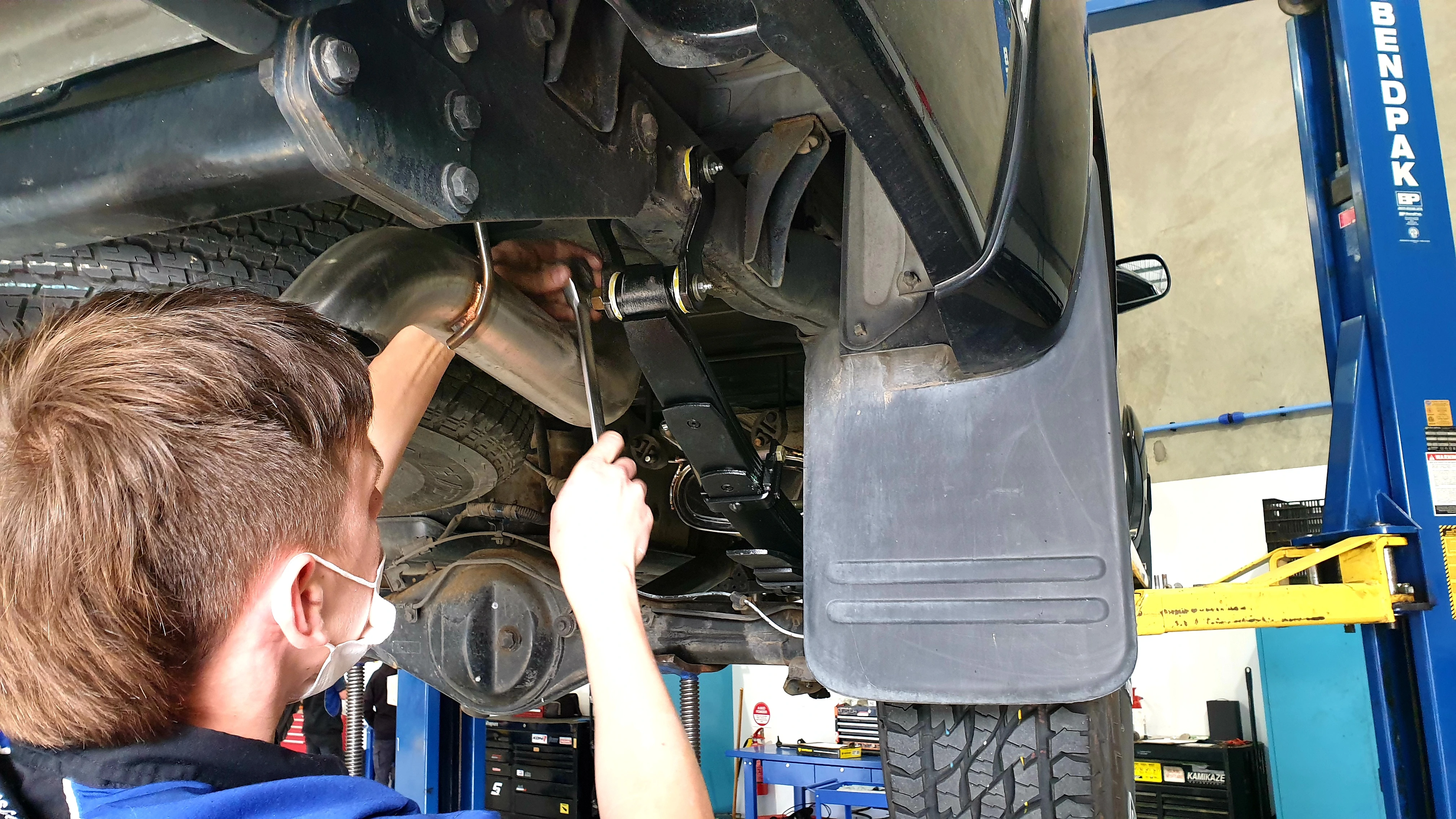
2. Look at the shocks: Peer in behind each wheel at the shock or strut body. A light misting is usually nothing to worry about, but a wet, oily streak running down the body means it’s leaking and done.
3. Check ride height: Stand back and study the car on level ground. Is one corner sitting lower than the rest, or is the nose or tail sagging? Uneven height usually means the springs are tired.
4. Read your tyres: Run your hand across the tread. Cupping, scalloped dips or uneven wear across the face are suspension tells, not simply an alignment issue.
5. Listen on a test drive: Take it over a rough road and a few speed humps, then note any clunk, rattle, knock or squeak and roughly where it seems to be coming from.
6. Feel the drive: Does it float over crests, crash into potholes or wander on the highway? Trust what you’re feeling, because nobody knows your car better than you do.
These checks will tell you whether something’s wrong, though not always which exact part is to blame. Telling a worn ball joint from a tired strut mount by the clunk alone takes trained hands and a bit of experience. That’s where a professional inspection earns its keep: you confirm your hunch and walk away with a clear list of what actually needs doing
How long do shock absorbers last, and when should they be replaced?
There’s no magic figure, but as a rough guide most shock absorbers begin to fade somewhere between 80,000 and 120,000 km. Plenty of drivers never swap them at all, quietly putting up with a car that handles a little worse each year. That’s how gradual the wear really is.
Really, timing comes down to condition rather than the odometer. Replace them once they start leaking, once the bounce test fails, or once the ride and handling have clearly fallen away. Australian conditions tend to bring that day forward, since corrugated dirt, heat, heavy loads and towing all push dampers far harder than a gentle city commute ever will. Tour, tow or carry weight regularly and you’ll want to be checking well before the averages suggest.
One rule worth sticking to: always replace shocks in axle pairs, so both fronts or both rears go on together. Pairing a fresh damper with a worn one leaves the damping uneven from side to side, which upsets both braking and cornering. And if the fronts have had it, the rears are rarely far behind. Not sure where yours stand? Have them checked rather than guessing off the odometer.
What makes suspension wear out faster in Australia?
Suspension is a wear item, and how you drive largely decides how quickly it gives up. Corrugated gravel and dirt roads pound the dampers without let-up, and that constant high-frequency movement heats the shock oil until fade sets in early. Pothole-ridden city streets do their damage differently, hammering bushes, ball joints and strut mounts with sharp, sudden impacts.
Weight is the other big factor. Load up a canopy, drawers, a second battery, water and camping gear, or hitch up a van or trailer, and the springs stay compressed while the dampers work near their limit for hours at a time. A vehicle packed to the roofline on stock suspension will sag, wallow and wear out long before a lightly loaded commuter does. This is the point where plenty of owners stop simply replacing worn parts and step up to a purpose-built 4x4 suspension upgrade or a GVM upgrade rated for the weight they genuinely carry.
Time takes its own toll, as well. Heat, age and UV slowly perish rubber bushes even on cars that have barely turned a wheel. Once a vehicle passes the ten-year mark, the bushes are worth a look no matter what the odometer reads.
Is it safe to drive with worn suspension?
In most cases you can still drive a car with worn suspension, but ignoring it isn’t wise, because tired dampers directly lengthen how long it takes you to stop. Independent testing has shown for years that badly worn shocks can add whole metres to an emergency stop, simply because a bouncing tyre spends part of every second barely touching the road. Add rain to the picture and that gap only widens.
There’s a knock-on cost, too. Worn suspension chews through tyres faster, so the longer you leave it the more you spend on rubber. It leaves the car less settled in crosswinds, under brakes and mid-corner, and it piles extra strain on the neighbouring steering and suspension parts as they take up the slack. Left alone, a minor clunk today can become a failed ball joint down the track.
None of this means the sky falls in the moment your bounce test looks less than perfect. It simply means worn suspension is a safety matter worth booking in, rather than a cosmetic niggle you can shrug off. Carrying a family or towing regularly? Then bump it up the priority list.
Shocks vs struts: what’s the difference?
It’s common to hear “shocks” and “struts” used as if they mean the same thing, yet they aren’t quite interchangeable. A shock absorber is a damper and nothing more, controlling spring movement while bolting in beside a separate spring. A strut does more work, wrapping the damper and the coil spring into a single structural assembly that also helps steer and locate the wheel.
In practical terms, struts are the bigger job. Because they carry load, they usually mean compressing the spring and resetting the alignment once they’re back in, whereas a plain shock is generally a simpler swap. Most modern cars run struts up front and shocks at the rear, though the layout does vary from one model to the next. The wear signs stay the same regardless, whether that’s bouncing, leaking or vague control, and you check for them in exactly the same way.
Knowing which setup your car runs makes any quote easier to follow. For the full breakdown, take a look at our guide on the difference between shocks and struts.
Should you repair or upgrade your suspension?
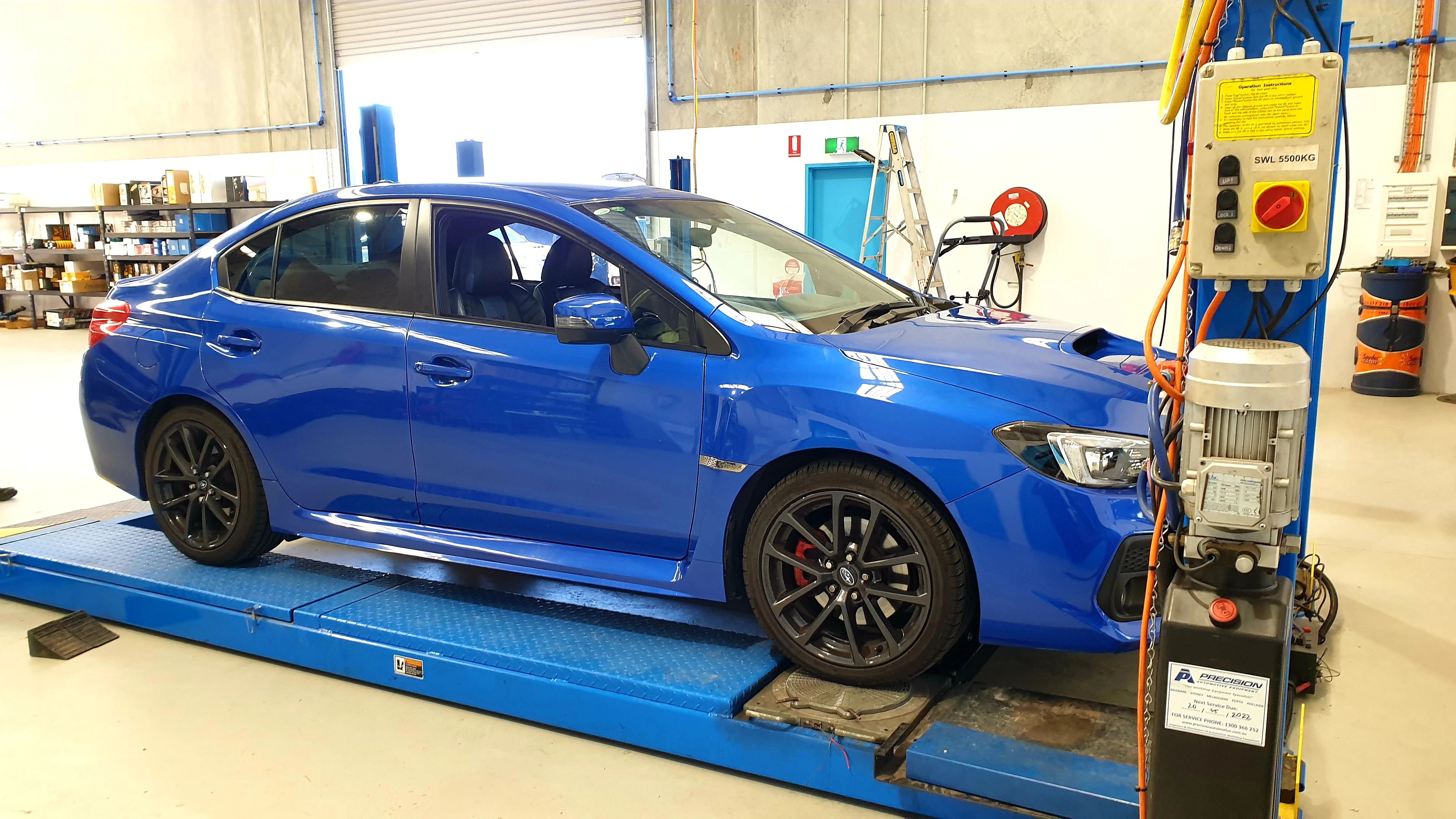
This is the moment to think beyond a straight like-for-like swap. If your car is stock, lightly used and you were happy with how it felt when new, then fitting quality matched units to replace the worn shocks brings it right back to that standard, and that’s the sensible choice. Bear in mind, though, that a straight replacement only ever returns you to what the factory decided was enough, and the factory built its numbers around an empty car on a smooth road.
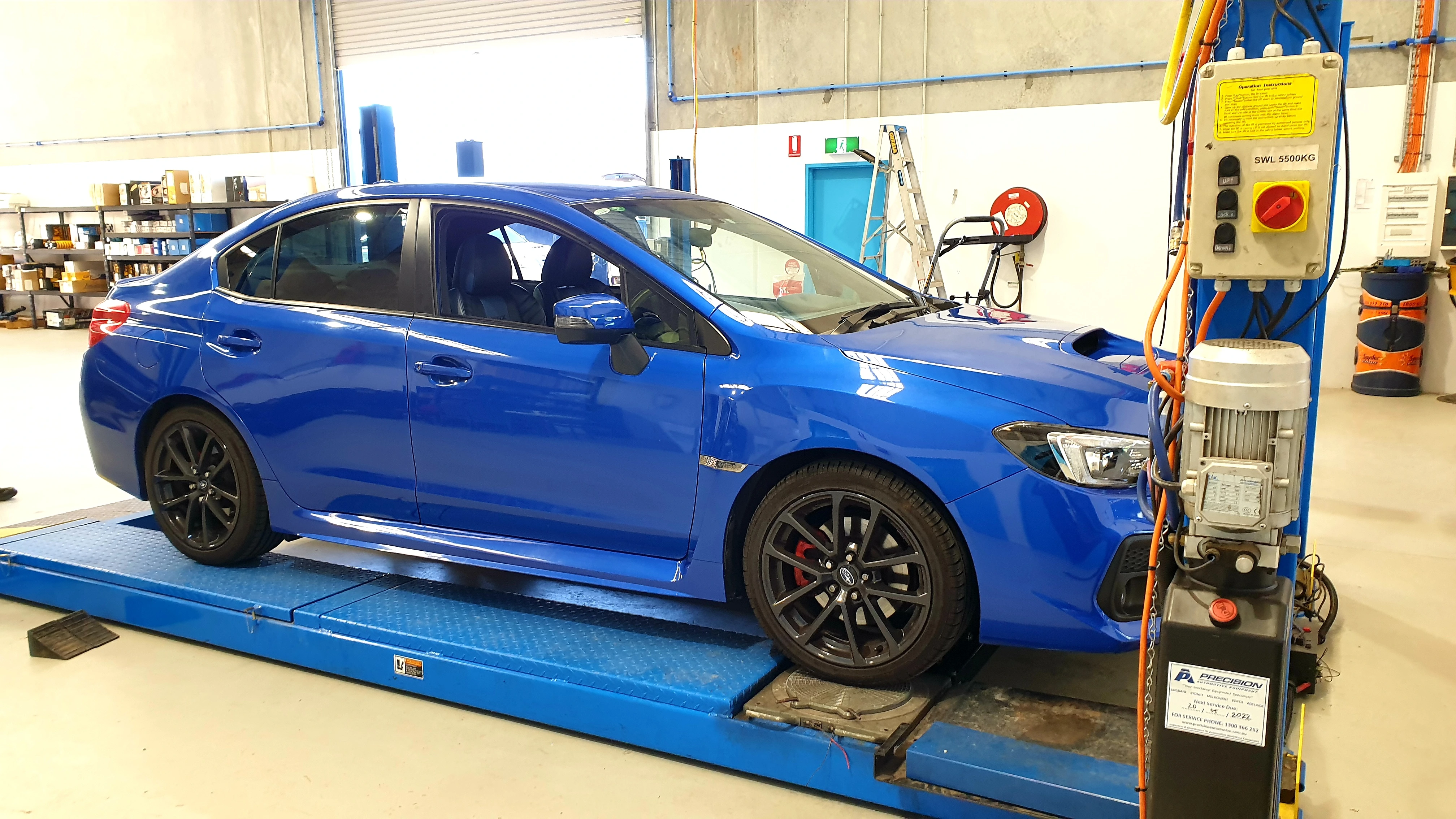
Once your driving has changed, though, an upgrade is usually the smarter money. Kitting out a 4x4 for touring, adding a canopy and drawers, or towing week in and week out all call for heavier-duty shock absorbers and springs matched to the weight, often bundled into a lift kit or a GVM upgrade that raises your legal carrying capacity. What you get back is a car that sits level under load, pulls up better, tows straighter and doesn’t wear itself out before its time. On performance and passenger cars, fitting sharper dampers and sway bars tightens up the handling without wrecking the everyday ride.
Really, the right answer hangs on the vehicle and the way you use it, which is why a proper conversation beats scrolling a catalogue every time. Our job at Fulcrum is to match the solution to how you actually drive, not to talk you into more than you need. Bring the car in and we’ll give you a straight answer on whether it’s a repair or an upgrade.
What does it cost to replace suspension in Australia?
What you’ll pay depends on the vehicle, the parts and how much has actually worn out, but a realistic ballpark helps. On common passenger cars, a fitted pair of quality shock absorbers usually lands at a few hundred dollars per axle, with premium and 4x4 applications sitting higher. Step up to a full four-shock replacement, a fresh set of springs or a complete lift kit and the figure climbs accordingly.
Struts work out dearer than plain shocks, thanks to the extra labour and the wheel alignment they need afterwards. Bushes, ball joints and links look cheap on their own, yet the bill mounts quickly when several have worn out together. And the cheapest quote rarely turns out to be the best value, since budget unbranded shocks fade fast and leave you paying twice.
The surest way to land on a real number is an inspection and a written quote matched to your exact vehicle. A free suspension check gives you precisely that with no commitment, so you head off knowing what’s worn, what’s optional and what it all costs before you decide anything.
Why a professional check beats guessing
|
Factor |
Fulcrum inspection + quality fitment |
Driving on it / cheap DIY swap |
|
Diagnosis |
Trained techs pinpoint the exact worn parts |
Guesswork; easy to replace the wrong thing |
|
Parts |
Quality shocks, springs and bushes matched to your vehicle and load |
Budget unbranded parts that fade early |
|
Safety |
Braking, stability and tyre wear restored |
Longer stopping distances, uneven tyre wear |
|
Fitment |
Fitted and aligned correctly, backed by after-sales support |
Alignment often skipped; comebacks common |
|
Long-term cost |
Done once, done right |
Pay twice when cheap parts wear out |
|
Network |
National workshop network, buy online and fit locally |
On your own if something’s wrong |
Done properly, replacing suspension costs a touch more at the outset and quietly saves you money across the life of the car. Which is why it pays to have the work checked and fitted by a specialist instead of gambling on the cheapest route.
Related guides
• Worn shock absorber symptoms: how to tell when your shocks are gone
• How long do shock absorbers last, and when should you replace them?
• Shocks vs struts: what’s the difference?
• Suspension noises explained: clunks, squeaks and knocks over bumps
• How much does it cost to replace suspension in Australia?
• Repair or upgrade? When to upgrade your suspension instead of replacing it
Suspension Check FAQs
Looking for more information about checking your suspension? Below we answer the most commonly asked questions
How do I tell if my car suspension is bad?
How do you test suspension on a car?
How long do shock absorbers last?
What are the symptoms of worn shock absorbers?
Is it safe to drive with worn suspension?
Why does my suspension clunk or squeak over bumps?
What's the difference between shocks and struts?
Do I have to replace shocks in pairs?
How much does it cost to replace shocks in Australia?
Should I replace my suspension or upgrade it?
How often should I get my suspension checked?
Where can I get my suspension checked for free?
Still not sure whether your suspension is worn or simply due for a look? Book a free suspension check at your nearest Fulcrum workshop. We’ll run the bounce test, inspect the shocks, springs and bushes, and give you a straight answer on whether it’s a repair or an upgrade, with no obligation on your part.


