
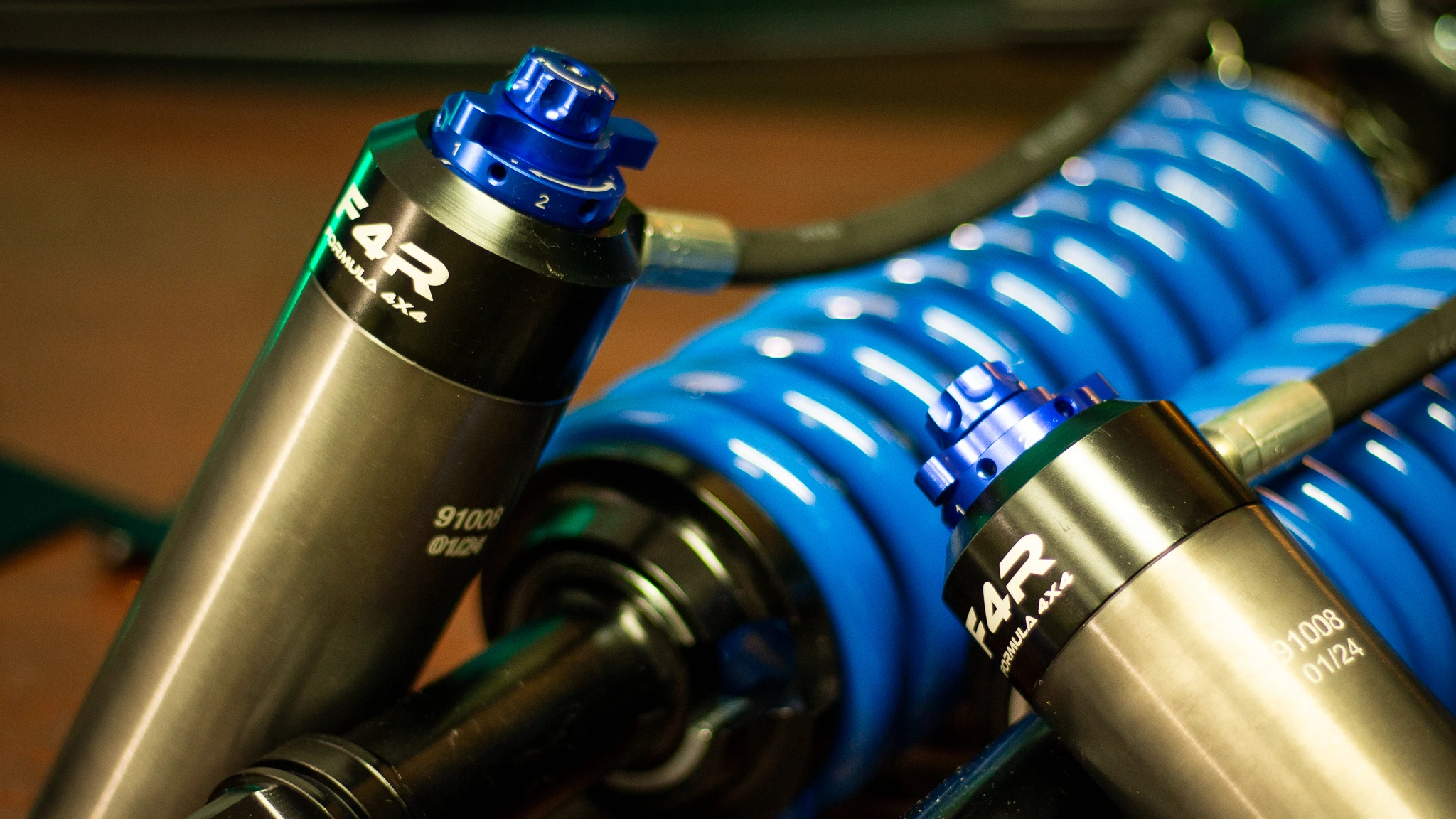

TL;DR: Replace like-for-like if your car is stock, lightly used and drove well when new. If you’ve added weight, tour or tow, upgrade instead. A suspension upgrade with heavier-duty shocks and springs, or a lift or GVM upgrade matched to your load, will sit level, stop better and last longer than standard parts you’ve outgrown.
Worn suspension leaves you at a fork in the road. You can replace it with standard parts, or step up to something better suited to how you drive now. Which way you go comes down to the vehicle and the job you ask of it, and the sections below will help you weigh it up. It’s part of our full guide to how to check your car’s suspension.
When is a straight replacement the right call?
Say your car is standard, it mostly does the commute, and you were happy with the way it drove when it was new. In that case, replacing worn shocks and springs with quality matched parts is the sensible move. It brings the car back to as-new and costs less than an upgrade. Why over-buy for a vehicle that isn’t asked to do more than it was built for?
Quality is what matters here. Fit good parts like-for-like, align them properly, and you get back the ride and safety the factory intended. When the factory setup already suits your driving, that’s a genuine win.
When should you upgrade instead?
The time to upgrade is when your driving has outgrown the standard setup. A few triggers make it obvious:
• You carry weight: A canopy, drawers, second battery, water and gear keep the springs compressed. Standard suspension sags and wallows under permanent load.
• You tow: A van or trailer loads the rear and unsettles the car. Upgraded, load-rated parts keep it level and stable.
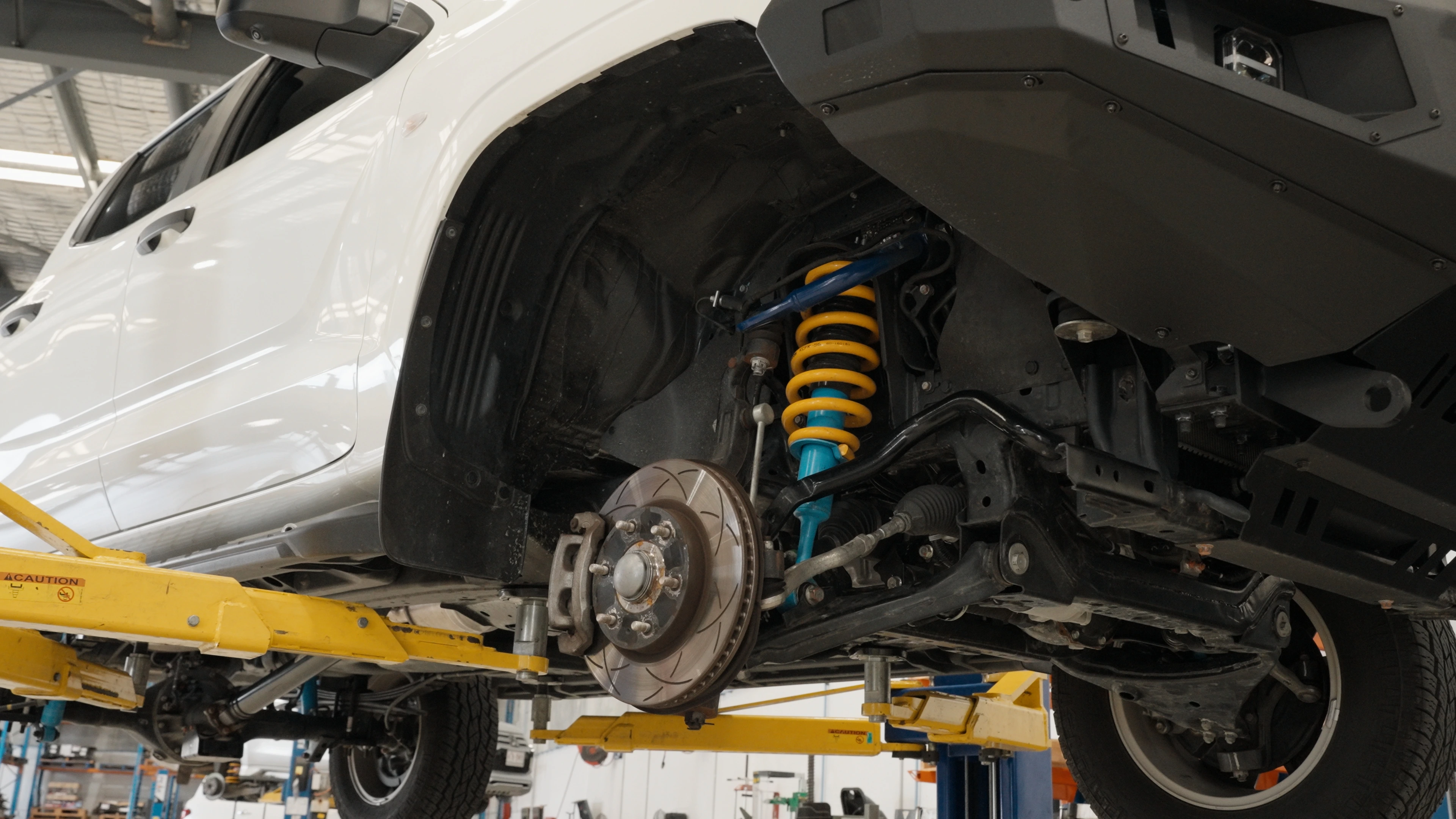
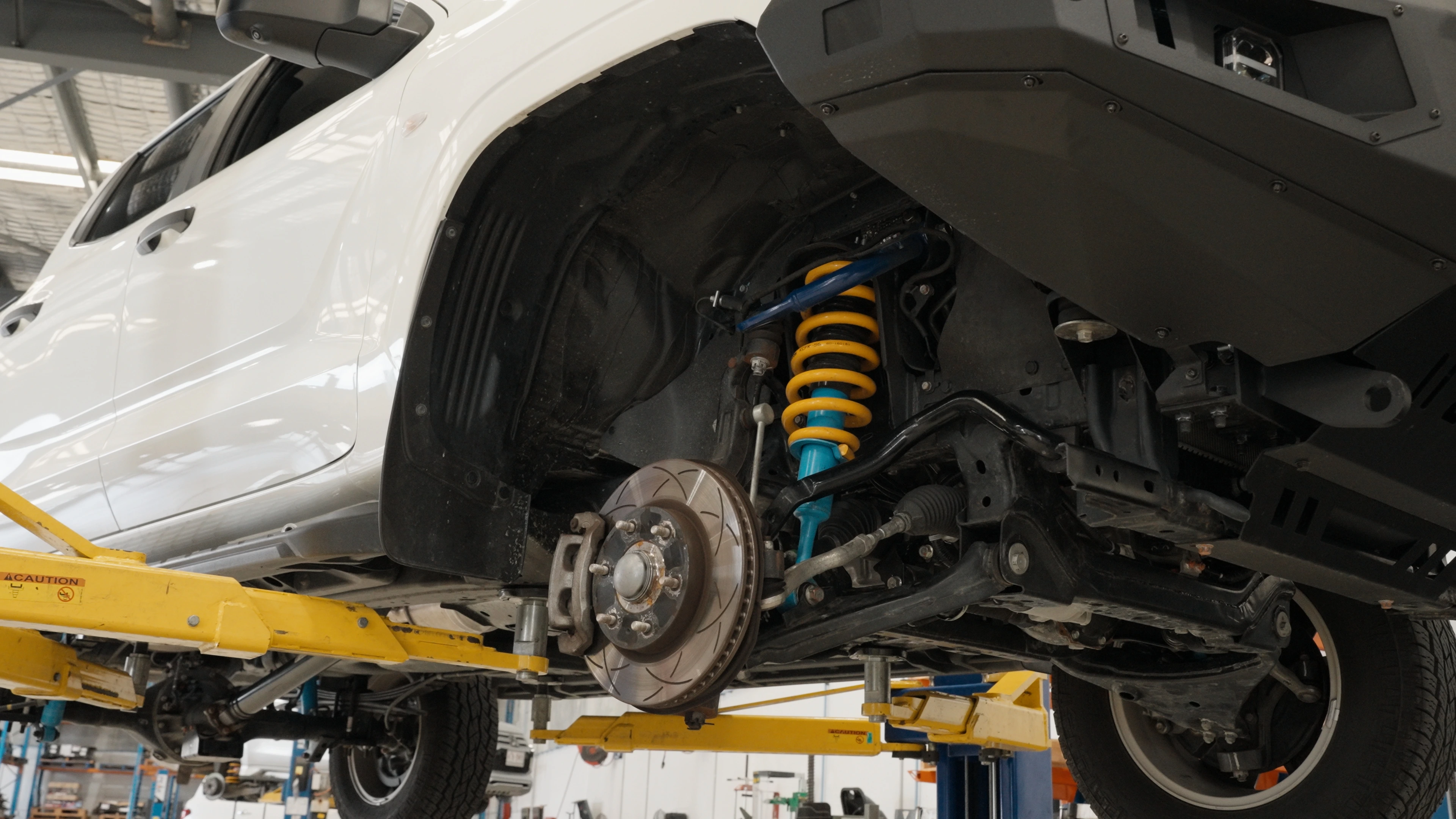
• You go off-road: Corrugations and rough tracks demand dampers built for the punishment.
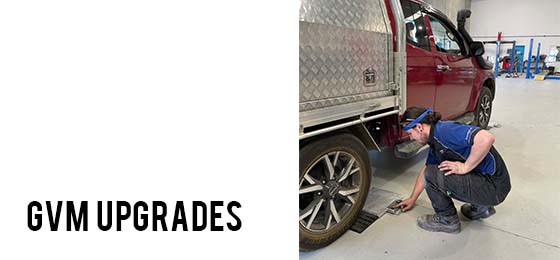
• You’ve hit your weight limit: If you’re near or over your factory rating, a GVM upgrade raises your legal carrying capacity legally and safely.
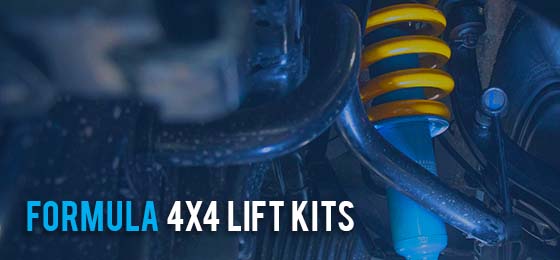
In cases like these, a matched 4x4 suspension upgrade or heavier-duty shock absorbers and springs aren’t indulgent. They fix problems standard parts simply can’t.
What does a suspension upgrade actually improve?
A well-matched upgrade keeps the car sitting level under load instead of sagging. It shortens stopping distances when you’re heavy, tows straighter and calmer, and stops the suspension wearing itself out early from working beyond its design. On performance and passenger cars, upgraded dampers and sway bars sharpen handling and cut vehicle sway without wrecking the ride. These gains are real, and you feel them on every drive.
How do you choose the right upgrade?
Here’s where a conversation beats a catalogue. The right setup hangs on your exact vehicle, what you carry, whether you tow and where you drive. Over-lifting or mismatched parts can ride worse and cause problems, so it pays to get it matched properly. Fulcrum’s job is to spec the right solution for how you actually use the vehicle, not to sell you more than you need.
Repair vs upgrade
|
Situation |
Best choice |
|
Stock car, city use, happy with stock ride |
Quality like-for-like replacement |
|
Added canopy, drawers, touring gear |
Upgrade: load-matched shocks/springs |
|
Regular towing |
Upgrade: load-rated setup |
|
Off-road / corrugations |
Upgrade: heavy-duty 4x4 kit |
|
At or over weight rating |
GVM upgrade |
|
Performance/handling focus |
Upgraded dampers + sway bars |
Suspension Upgrade FAQs
Looking for more information about upgrading your suspension for touring, towing or added load? Below we answer the most commonly asked questions.
Should I repair or upgrade my suspension?
What suspension should I get for touring or towing?
Does upgrading suspension improve safety?
What is a GVM upgrade?
Is it more expensive to upgrade than replace?
Will an upgrade ruin the ride?
Not sure whether to repair or upgrade? Book a free suspension check with Fulcrum and we’ll tell you straight, matched to how you drive. For the complete guide, read how to check your car’s suspension.


