


TL;DR: As a guide, a fitted pair of quality shock absorbers runs a few hundred dollars per axle for common passenger cars, more for 4x4 and premium applications. Struts cost more because of the added labour and wheel alignment. Bushes, ball joints and links are cheaper individually but add up. A written quote against your vehicle is the only accurate figure.
Suspension pricing swings around more than most car jobs, because “replacing your suspension” can mean anything from a single pair of rear shocks to a full lift kit. So here are realistic ballparks, along with the factors that move the price, so you can read a quote with confidence. It’s part of our full guide to how to check your car’s suspension.
What drives the cost of a suspension repair?
Four things set the price: which parts are worn, the type of part, your vehicle, and the labour to fit and align it. A single leaking rear shock is a small job. Four shocks plus springs plus worn bushes is a much bigger one. A common passenger car is cheaper to sort than a heavy 4x4 running specialised parts, and struts cost more than plain shocks because they’re structural and need an alignment once they’re back together.
Cheapest up front rarely stays the cheapest. Budget unbranded shocks fade fast, which means you end up paying for parts and labour twice. Quality parts fitted once are better value across the life of the car.
Rough price guide for common jobs
These are indicative ranges for planning only. Get a quote for your exact vehicle:
• Pair of quality shocks, fitted (passenger car): a few hundred dollars per axle.
• Struts, fitted, per axle: more than shocks, plus a wheel alignment.
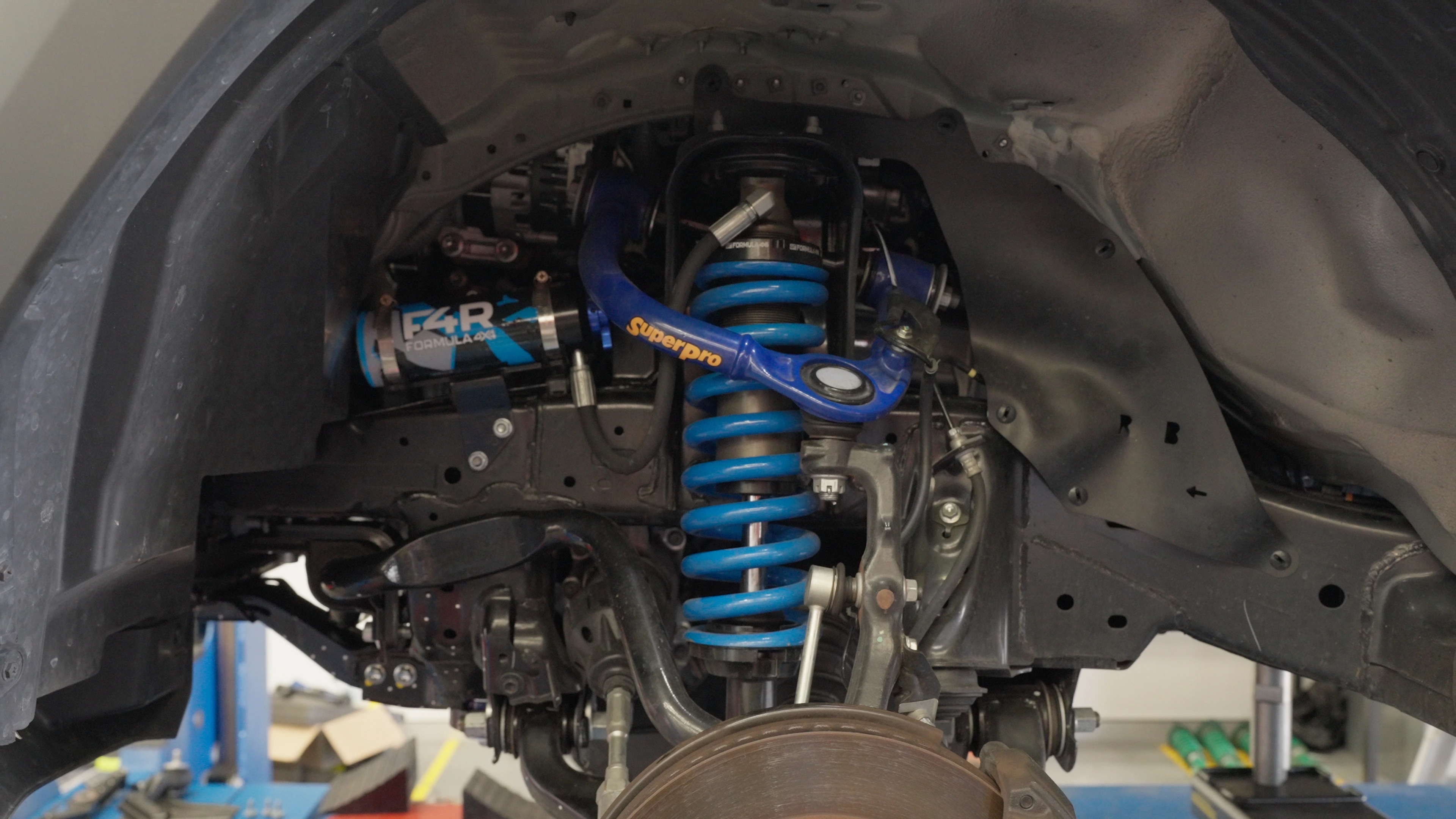
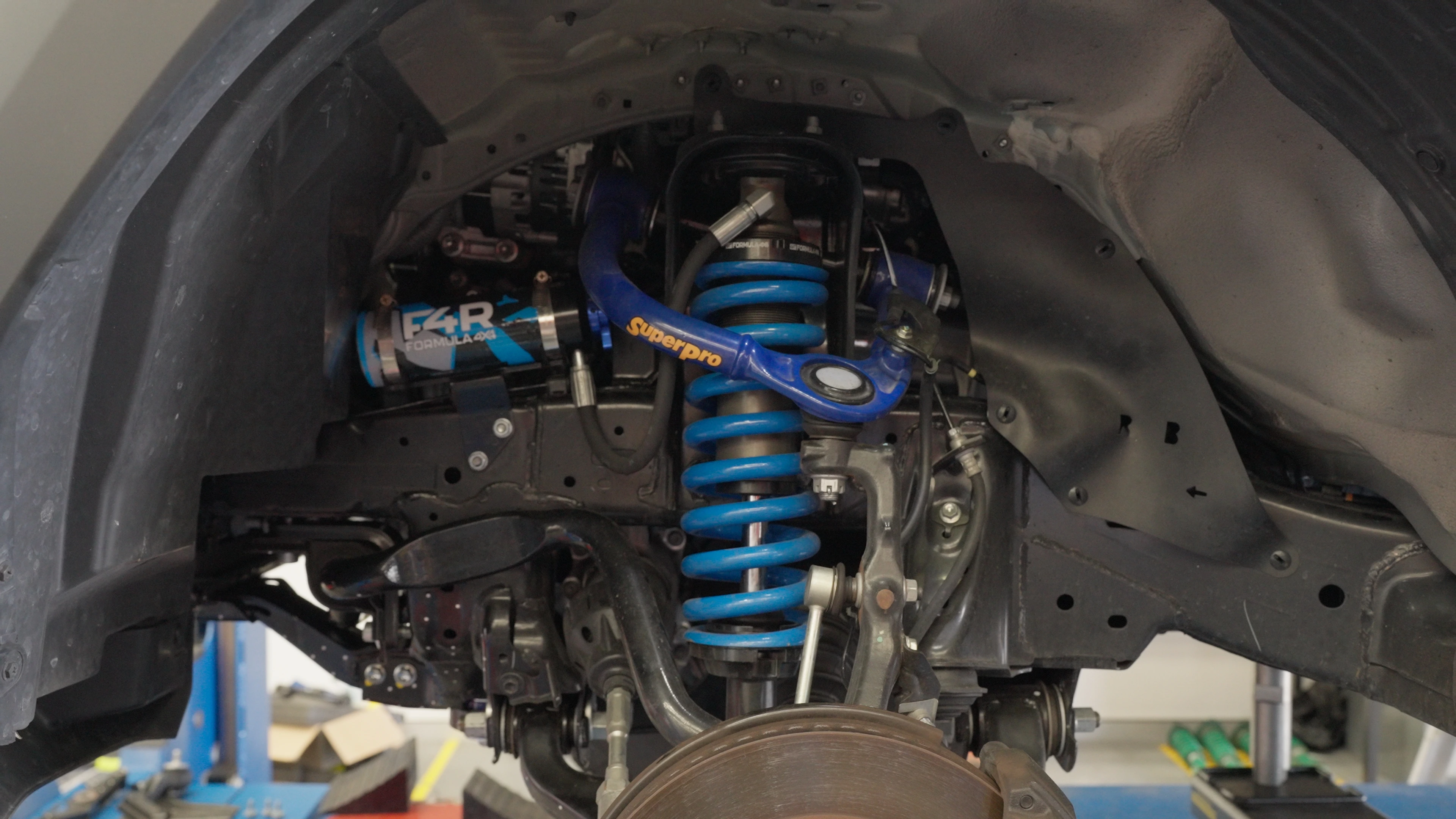
• Bushes / ball joints / sway bar links: cheaper individually, but several at once adds up.
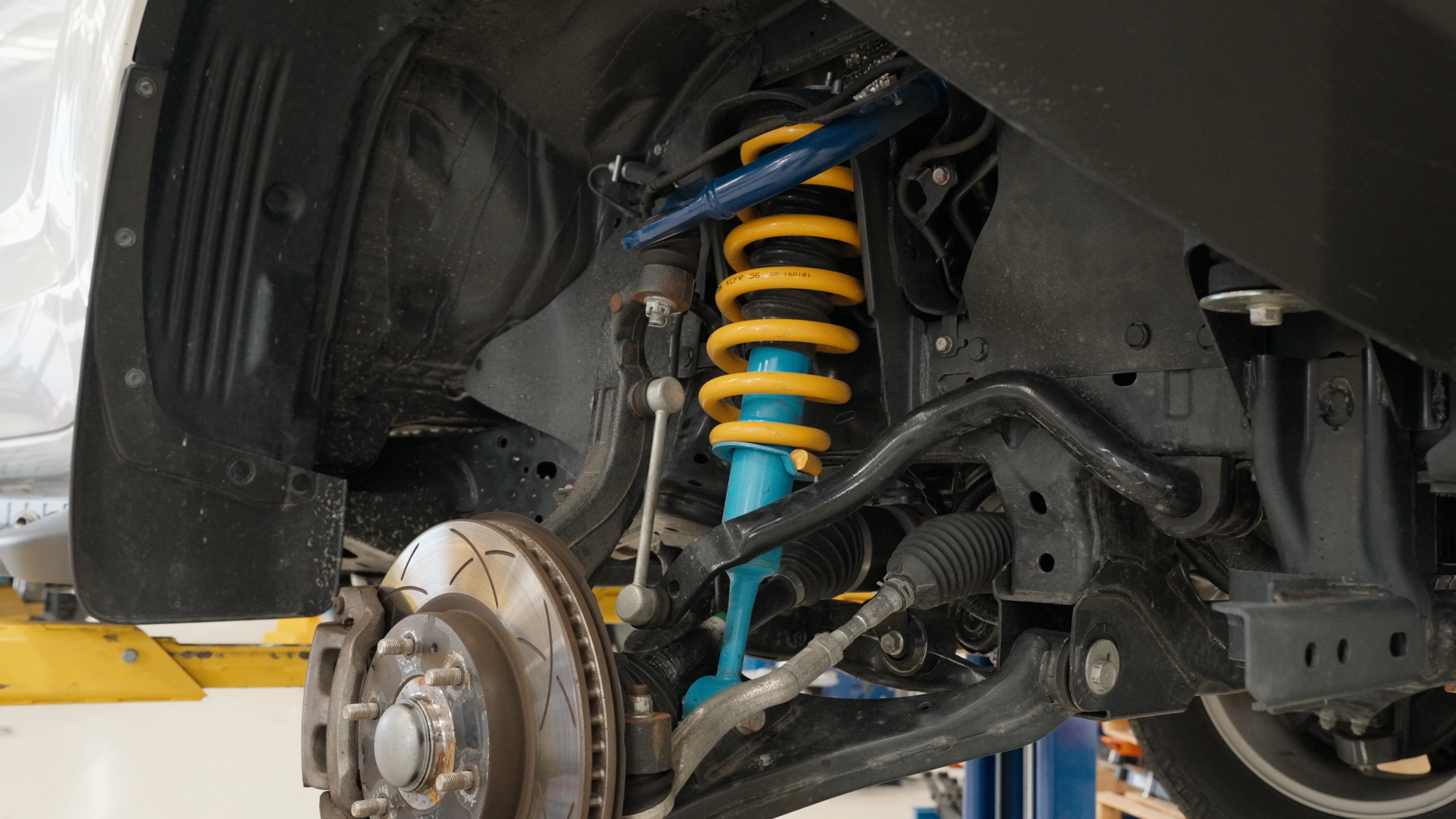
• 4x4 shocks and springs: higher than passenger cars due to specialised, heavier-duty parts.
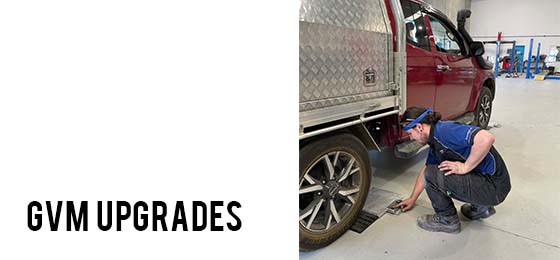
• Full lift kit or GVM upgrade: a larger investment; priced per vehicle and application.
Why is a wheel alignment part of the cost?
Any job that disturbs the struts or steering geometry needs a wheel alignment afterwards, or your new parts will chew through tyres and the car won’t track straight. It isn’t an upsell. It’s part of doing the job properly, so factor it into strut and lift-kit quotes.
Is it worth upgrading while you’re paying for labour?
Often, yes. Most of what a suspension job costs is parts plus labour, and the labour is much the same whether you fit standard or upgraded components. So if you tow, tour or carry loads, stepping up to heavier-duty shock absorbers or a matched 4x4 setup while it’s already apart can be better value than a plain like-for-like swap you outgrow. Our guide on repair or upgrade walks through when that makes sense.
Cost factors at a glance
|
Factor |
Lower cost |
Higher cost |
|
Part type |
Shocks |
Struts (needs alignment) |
|
Vehicle |
Common passenger car |
Heavy 4x4 / premium |
|
Scope |
One axle |
All four + springs + bushes |
|
Parts quality |
Budget (fades fast) |
Quality (lasts, better value) |
|
Alignment |
Not always needed |
Required for struts/lifts |
Suspension Replacement Cost FAQs
Looking for more information about the cost of replacing shocks, struts and suspension? Below we answer the most commonly asked questions.
How much does it cost to replace shock absorbers in Australia?
Why do struts cost more than shocks?
Is a wheel alignment included?
Are cheap shocks worth it?
Can I get a quote before committing?
Should I replace everything at once?
Want a real figure for your car? Book a free suspension check with Fulcrum for a written, no-obligation quote. For the complete guide, read how to check your car’s suspension.


