Brake Upgrade Kits with Fitting Position Front Axle, Rear Axle
Brake upgrade kits are designed to change the braking hardware of a compatible vehicle, rather than simply replace a worn part with its original equivalent. A properly ...
Read moreBrake upgrade kits are designed to change the braking hardware of a compatible vehicle, rather than simply replace a worn part with its original equivalent. A properly specified kit can change rotor or caliper capacity, heat management or the operating characteristics of the system.
Factory brakes are designed around the vehicle as it left the showroom. A touring 4WD with a bar, drawers, water and a fridge, towing a caravan down a long descent, is asking those same brakes to do a very different job. The right brake upgrade depends on what the vehicle needs and what the complete package has been engineered to support.
How a Brake Upgrade Differs From Routine Replacement
A like-for-like service restores the original brake configuration. Fresh discs, quality pads, new fluid and healthy hoses and calipers bring the brakes back to how they were designed, and for many vehicles that alone solves the complaint.
An upgrade uses different discs, calipers, pads or mounting hardware to meet a different intended duty. If the vehicle simply has worn discs or pads, correct replacement parts may be the most practical way to restore performance. If the brakes are in good condition and still struggle with the way the vehicle is used, that is when an upgrade earns its place.
What a Complete Brake Upgrade May Include
A brake upgrade kit is a grouped solution designed to change or improve a defined part of the original braking system. Depending on the application, it may include:
- Larger rotors: more mass and surface area to absorb and shed heat
- Upgraded calipers: often with more pistons, for more even clamping
- Matched brake pads: friction material chosen to suit the rotor and use
- Brackets and mounting hardware: to locate the new calipers correctly
- Brake hoses: to suit the new caliper position
- Parking brake parts: on some rear kits, including drum to disc conversions
The category name does not guarantee that every kit contains all of these parts, or that it upgrades both axles. Some kits replace only part of an existing assembly, while others change several connected parts. Read the contents list carefully, particularly where existing parts must be reused or separate items purchased. A kit should be treated as a specified system with defined fitment, not a collection of interchangeable brake parts.
Heat Management, Friction and Pedal Response
Heat is the main reason to upgrade brakes. Every stop converts movement into heat, and the heavier the vehicle, the more heat each stop creates. On a long descent with a trailer behind, repeated braking can build heat faster than the brakes can shed it. As temperatures rise beyond the system?s intended range, pad grip drops, fluid can boil and the pedal grows long. That is brake fade.
Different brake upgrades address different objectives:
- More rotor mass or ventilation helps manage repeated braking heat
- A different pad compound changes friction characteristics across the operating range
- A revised caliper arrangement changes clamping behaviour, force distribution and servicing
These factors interact, and a single larger part does not guarantee a shorter stopping distance. Tyres, road surface, vehicle loading and brake condition all influence results, and the tyres ultimately provide the grip needed to slow the vehicle. Choose an upgrade based on a specific shortcoming, such as repeated heat-related performance loss under known use.
Braking Demand for Touring, Towing and Work
Repeated stops and long descents build heat in discs and pads, and extra mass, wheel and tyre changes and different driving conditions all add to braking demand. A suitable upgrade can address heat capacity and sustained performance, but tyre grip, road surface and vehicle weight still govern achievable stopping distances.
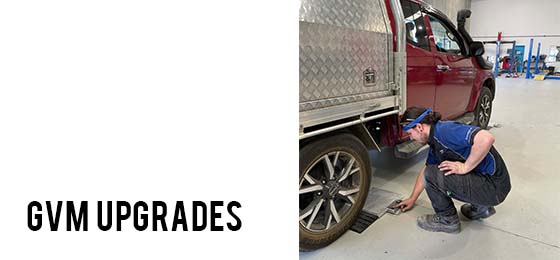
Vehicles with GVM upgrades are a particular case. A GVM upgrade raises the legal maximum weight the vehicle can carry, so the brakes are stopping more mass than the factory system was designed around, and many owners pair the two. A brake upgrade helps a vehicle stop its load more consistently, but it does not increase GVM, GCM or towing capacity, and no upgrade removes the need for good driving technique on descents.
Brake Upgrade Kits or Brake Booster Upgrades
These two upgrades are often confused. A brake booster upgrade increases the assistance behind the pedal, making it lighter to press, but does not help the brakes handle more heat. A brake upgrade kit increases the brakes? ability to absorb heat and generate stopping force, addressing fade and consistency under load. A heavy pedal points to a booster, and fade on descents points to a brake upgrade kit. Many heavily loaded vehicles benefit from both.
Wheel Clearance and System Compatibility
Larger rotors and calipers take up more space inside the wheel. Wheel diameter alone is not enough to confirm clearance, because spoke shape, wheel offset and caliper profile all matter. Some aftermarket wheels that meet the size requirement still do not clear, so a template check before ordering is worthwhile.
A kit may also specify compatible hubs, master cylinders, hoses, backing plates or parking brake arrangements. Check:
- Exact vehicle application and build date
- Front or rear fitment, and whether both axles are covered
- Minimum wheel size and clearance
- ABS and master cylinder requirements
- Parts to be reused from the original brakes
- Existing modifications, such as lifts or previous brake conversions
A kit designed for a standard configuration may not suit a vehicle that has already been modified, so document the current setup before ordering.
Matching Other Brake Components
Caliper size, pad area, rotor design, hydraulic balance and parking brake operation all interact. Changing one end of the vehicle can alter front-to-rear braking behaviour, so the system must be assessed as a whole. A quality installation also checks hydraulic hoses, fluid condition and the condition of the remaining brakes.
A partial upgrade changes one part of braking behaviour and must stay compatible with the rest of the system. A matched upgrade kit simplifies that by specifying how its parts work together, but only within its intended application.
Compliance and Brake Upgrades
Major brake changes can affect wheel clearance, hydraulic balance, ABS integration and vehicle approval. In Australia, modifications that change brake system design are covered by VSB 14 and each state or territory?s rules. Depending on the kit and where the vehicle is registered, the upgrade may need an engineering certificate or inspection, and some kits come with test documentation to support that. Confirm the requirements before parts are ordered, not after an incompatible conversion has been fitted.
Choosing the Right Brake Upgrade Kit
A few questions decide which upgrade, if any, makes sense:
- What problem are you solving? Fade, a long pedal, a heavy pedal and fast wear point to different solutions.
- How is the vehicle used? Regular towing, heavy touring and GVM upgraded vehicles get the most from a brake upgrade.
- Front, rear or both? The front does most of the work, but rear upgrades help balance and wet weather performance.
- Will it clear your wheels? Check the minimum wheel size and do a template check.
- How is it driven unloaded? A towing upgrade must still give predictable braking when the vehicle is empty.
- Is it serviceable? Check replacement pad availability and any special parts needed for future maintenance.
- What does your state require? Know the approval pathway before ordering.
Fitting, Bedding-In and Checks
Brake conversions should be installed by experienced technicians following the kit instructions and legal requirements. Calipers and brackets must be mounted with the correct fasteners and tightening procedures, hoses routed and checked through full steering lock and suspension travel, and the hydraulic system bled thoroughly with the specified fluid.
After installation, clearances, hydraulic integrity, pedal travel and electronic system operation need checking, along with wheel clearance with the wheels fitted. Pads and discs need bedding-in to the kit?s procedure. An upgrade should give predictable braking in everyday driving as well as under heavier use.
Fulcrum has been fitting suspension since 1976, with 16 Service Centres across Australia and 200+ authorised workshops. Having a brake upgrade assessed, fitted, bedded in and tested properly is what the network is there for.
Find Brake Upgrade Kits for Your Vehicle
Select your vehicle to see the brake upgrade kits available for it, or talk to your nearest Service Centre about whether an upgrade, a booster or a service suits the way you load and tow. Everything we supply is backed by our warranty, a fitment guarantee and the support of a nationwide workshop network.
- $4620.00preorderAvailable for Preorder. Stock due on 21/11/2026.