


A steeper front CV operating angle raises internal friction and heat, degrades grease faster, and sweeps the boot through a bigger arc. The result is a split boot, contaminated joint, clicking on lock and vibration under load. CV damage on a lifted 4WD is a wear pattern, not a single event.
If you want to know what a diff drop actually buys you, this is it. Lifting an independent front suspension 4WD steepens the angle the front CV shafts run at, and everything that goes wrong from there follows from that one change. Our diff drop kits exist to put that angle back where the joint was designed to live.
What a constant velocity joint is doing while you drive
A CV joint transmits drive through an angle at constant speed. Inside a typical outer joint, six balls run in curved tracks between an inner and outer race, held by a cage. The inner joint is usually a plunging design, either a tripod or a ball type, that also lets the shaft change length as the suspension moves.
At a shallow angle the balls travel a short distance in their tracks with each rotation and the grease film between them stays intact. Steepen the angle and each ball travels further per rotation, the contact pressure moves toward the edges of the tracks, and the cage works harder to keep everything spaced. More sliding means more friction, and friction means heat.
That is the whole mechanism, and everything below is a consequence of it.
The failure sequence, in the order it actually happens
Grease breaks down: Heat is what kills CV grease. Past a certain temperature it thins, separates and loses the additives that carry load, so the film protecting each ball gets thinner. This happens silently and long before anything is visible.
The boot works harder: A steeper angle sweeps the boot through a bigger arc on every rotation and holds the folds in compression on one side. Rubber and thermoplastic boots fatigue where they flex, so the outer folds start to fine crack.
The boot splits: Once it opens, grease is thrown out and dust and water get in. On corrugations and in mud this takes days, not months. A grease line thrown around the inside of the guard or the chassis rail is the classic sign.
The joint runs dry: Grit in the tracks accelerates wear enormously. Play develops between the balls and the races.
You finally hear it: Clicking or knocking at low speed on full lock is the outer joint. A vibration under acceleration that comes and goes with load is usually the inner plunging joint. By the time either is audible the joint is replaced, not repaired.
It takes other parts with it: A worn inner joint puts vibration through the diff housing and mounts. Grease thrown across a brake rotor or a boot is its own problem. On a badly angled setup the wheel bearing and hub can suffer too.
What it sounds and feels like, by symptom
|
What you notice |
Where it usually is |
What has happened |
|
Click or knock at low speed on full lock |
Outer CV joint |
Play between balls and races, usually after grease loss |
|
Vibration under acceleration, worse loaded |
Inner plunging joint |
Wear or binding in the plunge travel |
|
Grease line inside the guard or on the chassis |
Split boot, either end |
Boot has opened and is throwing grease |
|
Fine cracking on boot folds, no split yet |
Outer boot |
Fatigue from a bigger flex arc, the early warning |
|
Shudder pulling out of a driveway on lock |
Outer CV joint |
Advanced wear, replace rather than regrease |
|
Clunk on takeup that was not there before the lift |
Inner joint or diff mounts |
Driveline slop from angle and load |
None of these appear on a standard service checklist, which is why lifted front ends routinely wear for a long time before anyone looks.
What it costs to ignore
|
Item |
Cost |
|
Diff drop kit, Isuzu D-Max, MU-X and Mazda BT-50, TRC9015 |
$216.00 kit, $604.00 fitted |
|
Diff drop kit, LandCruiser 200 Series and Lexus LX, TRCLC200DD |
$180.00 kit, $658.00 fitted |
|
Diff drop kit, Hilux N90 2025-on, TRC9023 |
$590.00 kit, $1,068.00 fitted |
Prices in AUD, current at time of writing.
The comparison worth making is not kit price against nothing. It is kit price against a pair of CV assemblies and the labour, on a vehicle you have already spent money lifting.
Why a diff drop fixes the cause rather than the symptom
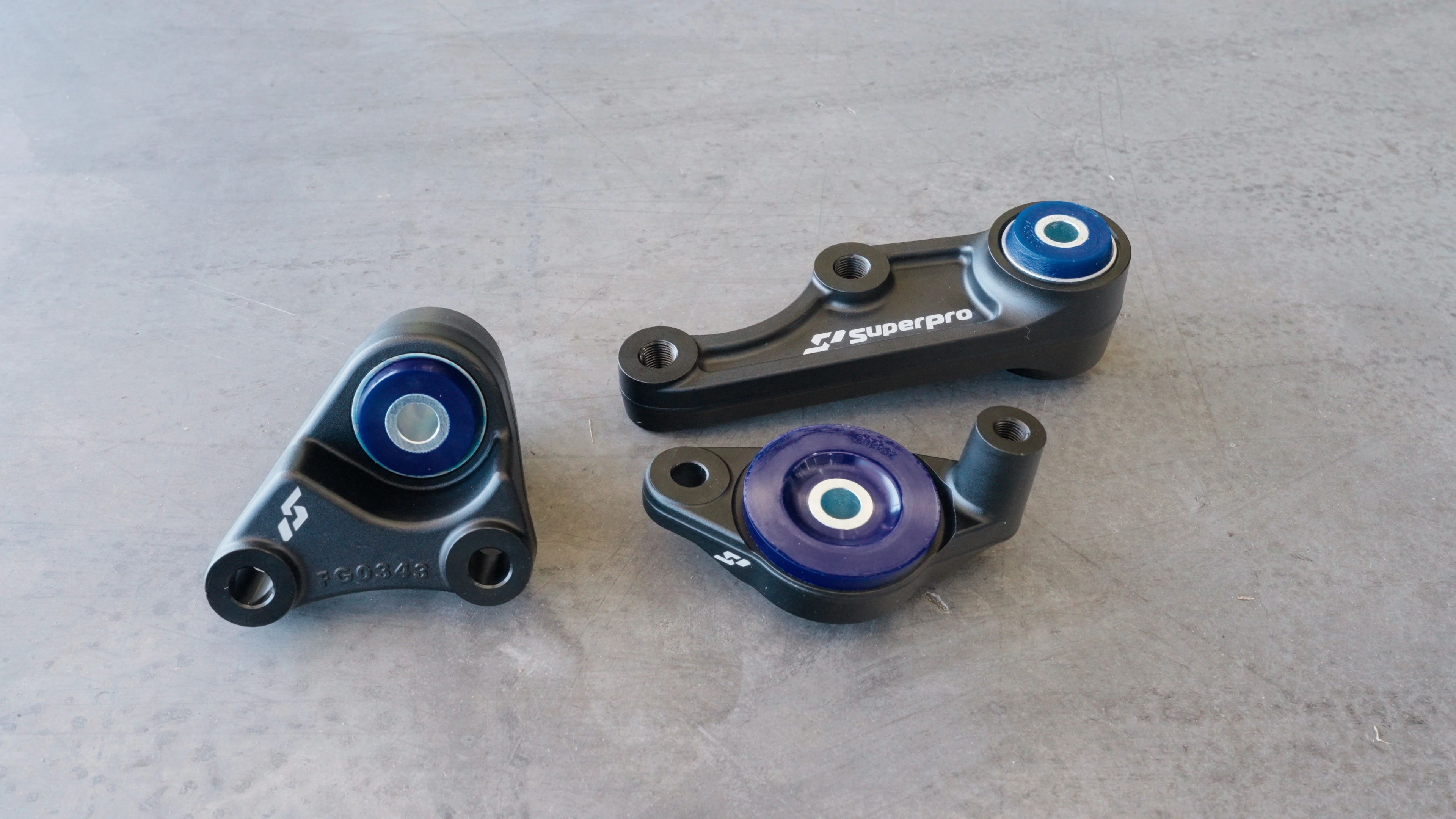
Replacing a worn CV puts a new joint into the same geometry that wore the old one out. It starts on the same curve. A diff drop lowers the front differential and its mounting points as an assembly, which brings the inner CV pivot back down toward the height of the outer one and flattens the shaft angle. SuperPro kits in our range drop the diff by approximately 25mm or more, which is enough to bring a 50mm lift back inside a sensible range on most of the platforms we fit.
If your CVs are already worn, fit the diff drop at the same time as the replacements. New joints in corrected geometry is the only version of that job worth paying for twice.
FAQs
What does a bad CV angle do to a lifted 4WD?
What is the first sign of CV damage after a lift?
What does a worn CV joint sound like?
How quickly does a split CV boot destroy the joint?
Can a worn CV joint be repaired or regreased?
Will fitting new CVs fix the problem if I keep the lift?
Does a bad CV angle damage anything besides the joint?
Does the diff drop remove all the extra angle from a lift?
How do I get my front CV angles actually measured?
Get the front end measured before it costs you a pair of CVs. See the full range of diff drop kits with Click and Fit at over 200 locations.
Related reading: why some utes survive without one · what a diff drop costs fitted · fitting one yourself


